Understanding Elective Procedures: Your 2026 Patient Guide

Elective procedures are defined as planned medical interventions scheduled in advance because they are not life-threatening emergencies, yet many are medically necessary for restoring function or preventing serious health deterioration. The term “elective” misleads most patients into thinking these surgeries are optional or purely cosmetic. That misconception can delay care that genuinely matters. Understanding elective procedures means recognizing that joint replacements, hernia repairs, cataract removals, and gallbladder surgeries all fall into this category. These are not vanity decisions. They are scheduled surgeries where timing is chosen based on patient readiness and clinical appropriateness, not urgency. Getting clear on this distinction is the first step toward making confident, informed healthcare decisions.
What are elective procedures and how are they classified?
Elective procedures are planned, non-emergency surgeries where the timing is chosen for patient convenience and clinical readiness rather than immediate medical crisis. This does not mean they are unimportant. A patient with severe osteoarthritis scheduling a knee replacement is making a medically necessary decision. The surgery is “elective” only because it is not happening in an emergency room tonight.
Clinicians use four classifications to organize surgical urgency. Understanding these categories helps you know where your procedure falls and what scheduling flexibility you actually have.

Surgical urgency categories break down as follows: elective surgeries are planned weeks or months ahead with no immediate health threat; semi-elective surgeries preserve life or prevent serious harm but do not need to happen within hours; urgent surgeries must generally occur within two days; and emergency surgeries happen immediately to prevent death or permanent injury.
The table below summarizes these distinctions with real examples:
| Classification | Timing | Examples |
|---|---|---|
| Elective | Weeks to months | Knee replacement, cataract removal, hernia repair |
| Semi-elective | Days to weeks | Cancer resection, vascular bypass |
| Urgent | Within 48 hours | Appendicitis with contained rupture, bowel obstruction |
| Emergency | Immediate | Ruptured aortic aneurysm, traumatic hemorrhage |
Scheduling flexibility is one of the most underappreciated advantages of elective procedures. You can time surgery around your work calendar, arrange family support, and complete preoperative preparation properly. Patients who rush into elective procedures without adequate preparation tend to have worse recovery experiences than those who use the scheduling window strategically.
What are the benefits and risks of elective surgery?
The benefits of elective surgery extend well beyond fixing a single problem. Most elective procedures address conditions that, left untreated, worsen progressively and become harder to treat. A hernia repaired early is a straightforward outpatient procedure. A hernia repaired after years of neglect may require complex reconstruction.
Key benefits of elective procedures:
- Restored physical function, such as regaining full range of motion after joint replacement
- Significant quality of life improvement, including relief from chronic pain or vision impairment
- Prevention of condition deterioration that would require more complex or risky intervention later
- Psychological benefits from resolving a long-standing health concern
- Predictable recovery planning because the procedure is scheduled, not reactive
Risks exist in every surgical category, and elective procedures are no exception. Anesthesia carries risks including allergic reactions and respiratory complications. Infection, blood clots, and nerve damage are possible with any invasive procedure. Recovery time varies widely depending on the procedure type, your baseline health, and how well you follow post-operative instructions.
Risks to discuss with your surgeon before proceeding:
- Anesthesia reactions, particularly if you have respiratory conditions or allergies
- Surgical site infection, especially relevant for procedures involving implants
- Deep vein thrombosis during recovery periods requiring immobility
- Unexpected findings during surgery that change the scope of the procedure
- Extended recovery timelines that affect work, caregiving, or daily responsibilities
Informed consent is the formal process where your surgeon discloses all material risks, benefits, and alternatives before you agree to proceed. One study found only 8.1% of patients had full disclosure prior to surgery. That number should concern you. A signature on a consent form does not guarantee you understood what you signed. Ask your surgeon to walk through each risk verbally, not just hand you a form.
Pro Tip: Before signing any consent form, ask your surgeon three specific questions: What is the most common complication for this procedure? What happens if I delay or decline surgery? What are the non-surgical alternatives?
How do patients decide on elective procedures?
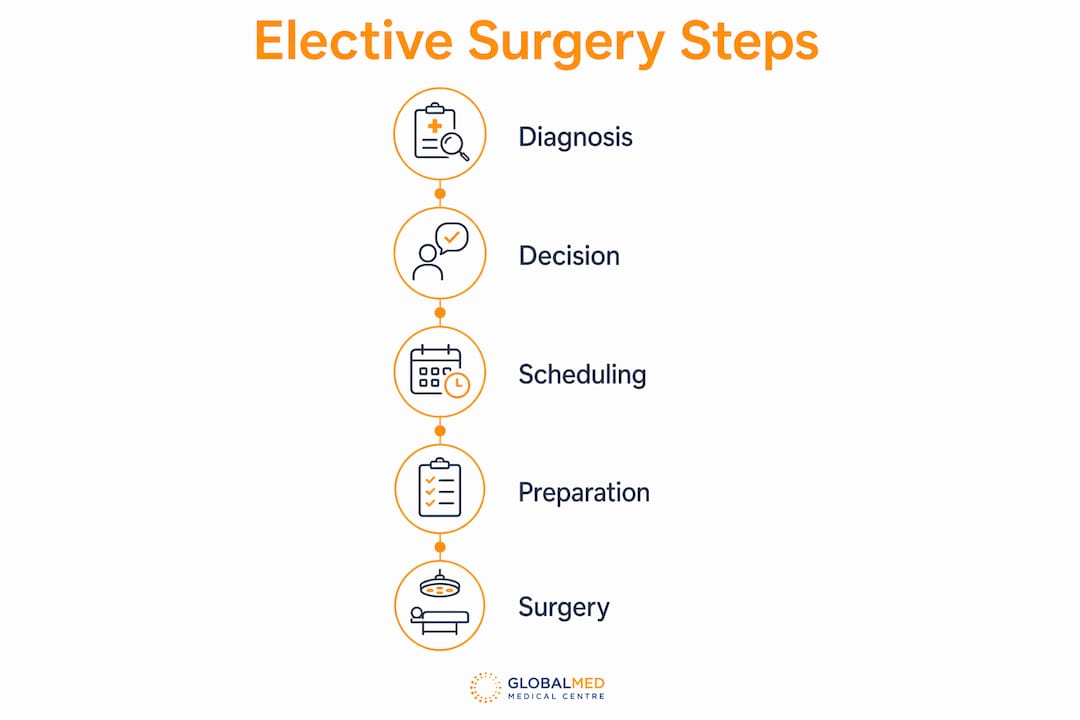
The decision to proceed with an elective procedure starts with a confirmed diagnosis. Self-reported symptoms are not enough. You need imaging, lab results, or specialist evaluation that objectively confirms the condition and its severity. Proceeding with surgery based on ambiguous findings is one of the most common sources of patient regret.
Second opinions increase patient confidence significantly, particularly for procedures with long-term quality of life implications. Surgeons themselves recommend asking a second provider about how frequently they perform the procedure, how rare your diagnosis is, and whether the timing of surgery is truly flexible. These three questions alone can clarify whether you are being advised appropriately.
Practical considerations that affect your decision include the following:
- Insurance coverage verification. Confirm your procedure is covered and identify which providers are in-network before scheduling.
- Surprise billing protections. The No Surprises Act protects insured patients from unexpected charges when out-of-network providers like anesthesiologists or radiologists are involved at in-network facilities. Your cost-sharing is calculated as if all providers were in-network.
- Surgeon volume and experience. Outcomes for procedures like joint replacements correlate directly with how frequently a surgeon performs them. Ask for their annual case volume.
- Timing relative to your health status. Scheduling surgery when you are managing an active infection, uncontrolled diabetes, or significant cardiovascular instability increases complication risk. Optimize your health first.
- Recovery logistics. Arrange transportation, post-operative care, and time off work before you confirm a surgery date, not after.
Patients budgeting for elective surgery should also anticipate ancillary service charges. Anesthesia, pathology, and radiology fees are often billed separately from the surgeon’s fee. The No Surprises Act limits how much these charges can exceed your in-network cost-sharing, but you still need to plan for them. Ask your facility’s billing department for a full cost estimate before your procedure date.
How should you prepare for an elective procedure?
Preparation for elective surgery begins weeks before the procedure date, not the night before. The quality of your preparation directly affects your recovery speed and complication risk. Patients who follow structured pre-operative pathways experience shorter wait times and fewer cancellations, with one study showing wait times reduced from several weeks to under seven days when evidence-informed pre-op protocols were applied.
Follow these preparation steps in order:
- Complete your medical evaluation. Your surgeon or anesthesiologist will assess your health status to determine which pre-operative tests you actually need.
- Understand risk-stratified testing. Routine lab testing is not necessary for all patients. Only those with higher anesthesiology risk require comprehensive pre-op panels. Unnecessary testing creates false positives and delays.
- Review your medications. Blood thinners, anti-inflammatory drugs, and certain supplements must be stopped before surgery. Get a specific list from your provider with exact timing.
- Follow pre-operative nutrition and fasting instructions. These are not suggestions. Fasting protocols exist to prevent aspiration during anesthesia.
- Engage with patient education materials. Patient education sessions improve comprehension of what to expect, which reduces anxiety and improves post-operative compliance.
- Clarify your consent form. A 2026 pilot study found that evidence-based consent materials using natural frequencies, bar charts, and e-learning modules significantly improved patient understanding for procedures like knee arthroplasty. Ask if your facility offers these tools.
- Arrange your recovery environment. Set up your home before surgery. Stock medications, prepare a recovery space, and confirm who will assist you during the first 48 to 72 hours.
Pro Tip: Bring a written list of questions to your pre-operative appointment. Ask specifically about what “normal” recovery looks like versus what symptoms should prompt you to call the clinic. Patients who know what to expect report less anxiety and contact their care team more appropriately after discharge.
Communication with your care team throughout this process is not optional. If your symptoms change, your health status shifts, or you develop concerns about the procedure, contact your provider before the surgery date. Changing course before an operation is always easier than managing complications after one.
Key takeaways
Elective procedures are medically planned surgeries that require informed decision-making, structured preparation, and clear communication with your care team to achieve the best outcomes.
| Point | Details |
|---|---|
| “Elective” does not mean optional | Many elective surgeries are medically necessary and prevent serious health deterioration if delayed. |
| Four surgical classifications exist | Elective, semi-elective, urgent, and emergency categories define timing and medical necessity. |
| Second opinions build confidence | Asking about procedure frequency, diagnosis rarity, and timing flexibility helps you decide with clarity. |
| Surprise billing protections apply | The No Surprises Act limits out-of-network charges at in-network facilities for ancillary services. |
| Preparation reduces complications | Risk-stratified pre-op testing and structured preparation pathways shorten wait times and improve outcomes. |
Why the word “elective” deserves a second look
The single biggest barrier I see to patients getting timely, appropriate care is the word “elective” itself. People hear it and think discretionary. They think they can wait indefinitely, or that their surgeon is recommending something they do not really need. That assumption costs people years of unnecessary pain and, in some cases, leads to conditions that become genuinely harder to treat.
What I find most telling is the informed consent data. Only 8.1% of patients receiving full disclosure before surgery is not a minor gap. It reflects a systemic failure to treat patients as active participants in their own care. The solution is not to blame surgeons. It is to train patients to ask better questions and demand clearer answers.
The shift toward evidence-based consent tools, including visual aids and e-learning modules, is one of the most meaningful developments in elective surgery preparation. When patients understand risk in plain language with visual context, they make decisions that align with their actual values and circumstances. That is what informed consent is supposed to accomplish.
Second opinions are underused, particularly in cultures where questioning a physician feels impolite. My view is that any surgeon worth their credentials welcomes a second opinion. It confirms the diagnosis, validates the recommendation, and sends a patient into surgery with genuine confidence rather than passive compliance. For procedures affecting long-term mobility, vision, or chronic pain, a second opinion is not excessive caution. It is standard practice.
— IGHS
How GLOBALLMED Medical Center supports your elective care journey
GLOBALLMED Medical Center, Macau’s largest private outpatient clinic, provides the clinical infrastructure and specialist access patients need to make informed decisions about elective procedures.

From initial consultation through pre-operative evaluation, GLOBALLMED’s team applies evidence-informed pathways that reduce unnecessary testing while maintaining full clinical safety. Patients receive structured education support and direct access to specialists who explain procedures clearly, not just in consent forms. Whether you are exploring a specific elective procedure or need a second opinion before committing to surgery, GLOBALLMED’s outpatient services are designed to give you the clarity and confidence to move forward. International patients are welcome, and the appointment process is built for convenience across time zones and languages.
FAQ
What does “elective procedure” actually mean?
An elective procedure is a planned medical intervention scheduled in advance because it is not a life-threatening emergency. The term does not mean optional or cosmetic. Many elective procedures, including joint replacements and hernia repairs, are medically necessary.
How is elective surgery different from urgent or emergency surgery?
Elective surgery is scheduled weeks or months ahead with no immediate health threat. Urgent surgery must occur within approximately two days, and emergency surgery happens immediately to prevent death or permanent injury.
Do I need a second opinion before elective surgery?
Second opinions are strongly recommended for any elective procedure with significant risks or long-term quality of life implications. Surgeons advise asking about procedure frequency, diagnosis rarity, and timing flexibility to make a more confident decision.
What pre-operative tests will I need?
Pre-operative testing is risk-stratified. Patients with low anesthesiology risk do not need routine lab panels. Only those with higher risk profiles require comprehensive testing. This approach reduces unnecessary procedures and shortens wait times without increasing surgical cancellations.
Am I protected from surprise medical bills for elective surgery?
Yes. The No Surprises Act protects insured patients from unexpected charges when out-of-network providers such as anesthesiologists or radiologists are involved at in-network facilities. Your cost-sharing is calculated as if those providers were in-network.