
Specialist Consultation Preparation Checklist: 2026 Guide

A specialist consultation preparation checklist is a structured set of steps designed to maximize the clarity and effectiveness of your medical specialist visit. Most specialist appointments last 20–30 minutes. That window is short, and patients who arrive without organized records, prioritized questions, or confirmed insurance details routinely leave without the answers they came for. The checklist approach, recommended by clinical guidelines and outpatient specialists, converts a potentially rushed encounter into a focused, productive exchange. GLOBALLMED Medical Center supports patients in preparing thoroughly before every visit, recognizing that preparation directly affects diagnostic accuracy and treatment outcomes.
1. What essential medical documents should you prepare?
The foundation of any consultation prep guide is a focused medical packet. Specialists prefer concise, relevant documentation over bulky folders of records. A focused medical packet should include a one-paragraph summary of your chief complaint with a clear timeline, recent test results from the last 6–12 months, and any prior specialist letters related to the current problem. Imaging reports alone are not enough. Bring the actual media, whether on disc, USB, or through portal access, so the specialist can review the original images directly.
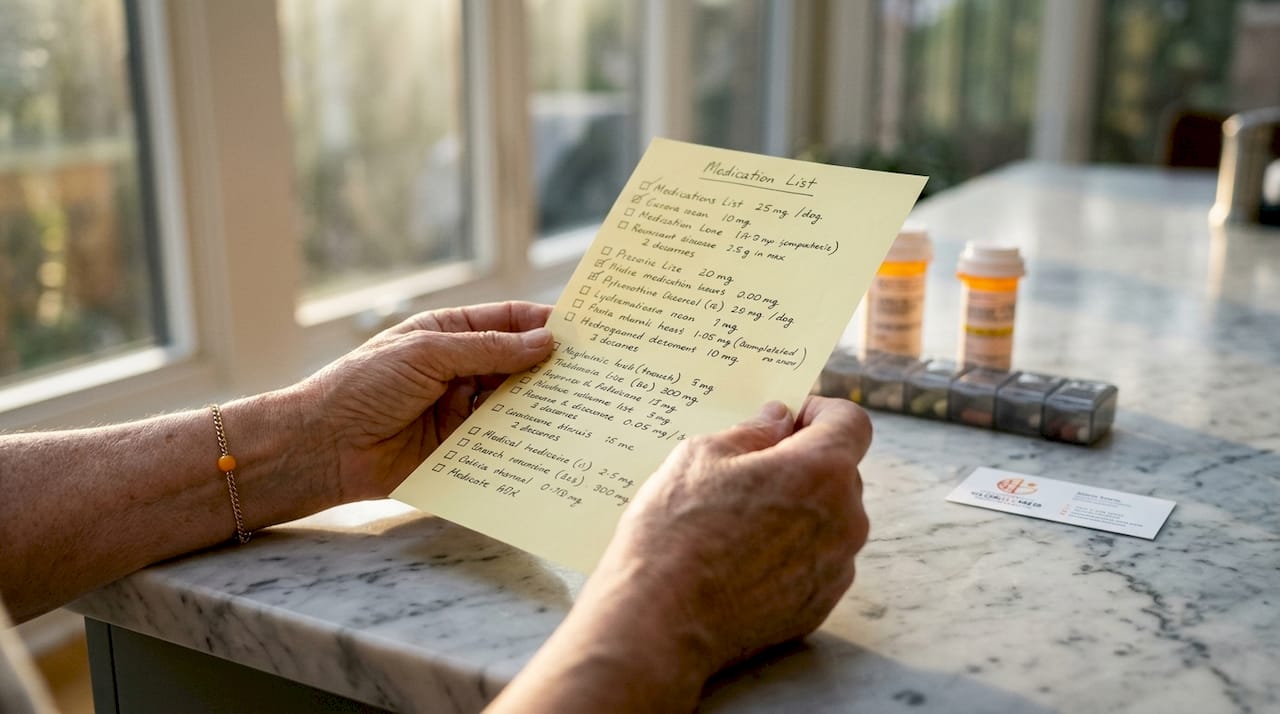
Your medication list deserves its own page. Write out every prescription drug, over-the-counter medication, vitamin, and supplement, including the dose and how often you take it. Omitting supplements is one of the most common patient errors, and it can affect prescribing decisions significantly.
A symptom log tailored to your specialty adds real diagnostic value. For a cardiology visit, track episodes by date, time, duration, and physical activity level. For a rheumatology visit, note joint stiffness patterns and morning versus evening severity. Systematically tracking symptom specifics by date, severity, and triggers creates better consultation efficiency and diagnostic accuracy.
Pro Tip: Keep your documentation to what a specialist can review in under 3 minutes. Anything beyond that risks being skipped entirely.
2. How to set your consultation priorities and questions
Every patient arrives with more concerns than a 20–30 minute consultation can address. The solution is a “Top Three” list: identify your three most pressing priorities and hand them to the specialist at the start of the appointment. Early agenda setting prevents the most important questions from getting buried at the end of a short visit.
Write your questions down before the appointment. A written list removes the pressure of remembering everything in the moment and signals to the specialist that you are organized and engaged. Patients who bring written questions consistently report more productive visits than those who rely on memory alone.
Structure your questions around three categories:
- Working diagnosis: “What do you think is causing this?” or “What conditions are you ruling out?”
- Treatment options: “What are the available treatments?” and “What are the risks of each?”
- Next steps: “What tests do you need?” and “When should I follow up?”
Review a common questions list before your appointment to identify gaps you may have missed.
Pro Tip: Ask the specialist to explain any diagnosis or procedure in plain language. Saying “Can you explain that as if I had no medical background?” is a fully acceptable and professional request.
3. What logistical and administrative preparation improves outcomes?
Administrative gaps waste clinical time. Arriving without the right paperwork forces the consultation to start late or focus on bureaucracy instead of your health. Handle every logistical item at least 48 hours before your appointment.
Key administrative steps include:
- Insurance and pre-authorization: Confirm your coverage and obtain any required pre-authorization codes before the visit. Some specialist procedures require prior approval, and missing this step can result in unexpected costs.
- Referral letter: Bring the original referral from your GP. Many specialists will not proceed without it.
- Identification and insurance cards: Carry a valid photo ID and your insurance card to every appointment.
- GP medical summary: Most GP practices provide printed medical summaries within 48 hours. Request yours well in advance to avoid delays.
- Appointment timing: Early morning slots typically reduce waiting times. Later slots can sometimes allow for more thorough discussions if the clinic schedule has shifted.
One detail patients frequently overlook is knowing who they will actually see. Confirm whether your appointment is with the named consultant or a registrar. Both are qualified, but knowing in advance sets the right expectations and helps you decide whether to raise complex decisions at that visit or request a direct consultant review.
Understanding the different outpatient consultation types at your center also helps you arrive with the right mindset and documentation.
4. What role does a support person play in your visit?
Bringing a trusted friend or family member to your appointment is one of the most underused preparation strategies. A support person acts as a second set of ears, takes notes while you focus on the conversation, and can ask follow-up questions you might forget under pressure. Emotional support during a difficult diagnosis also has measurable value for recall and decision-making.
If you attend alone, ask the specialist’s permission to record the consultation. A recording allows you to review the discussion at home, share it with family, and catch details you missed in the moment.
Before leaving the room, use the “summary back” technique. Repeat the agreed next steps to the specialist in your own words to confirm your understanding. Summarizing agreed next steps back to the specialist before leaving reduces the risk of ambiguity and unproductive follow-ups.
“Request to be copied on the clinic letter sent to your GP. This letter contains the specialist’s diagnosis, treatment plan, and recommended next steps. It is your permanent record of the consultation and a critical tool for continuity of care.”
Clinical Nurse Specialists are also a frequently overlooked resource. For patients managing chronic conditions, the Clinical Nurse Specialist assigned to your case can answer questions between appointments and coordinate care outside the consultation room. Ask for their contact details before you leave.
5. How to tailor your checklist for specific consultation types
A first-time consultation, a follow-up visit, and a second opinion each require a different document focus. Preparing the same packet for all three wastes time and misses the specialist’s actual needs.
| Consultation type | Document focus | Special considerations |
|---|---|---|
| First consultation | Full medical history summary, recent workup, symptom log | Bring all relevant imaging media, not just reports |
| Follow-up visit | Updated symptom log, new test results since last visit | Note any medication changes or side effects |
| Second opinion | Previous specialist’s letter, full test results, imaging | Avoid editorializing; let the records speak |
| Procedural specialty (orthopedics, cardiology) | Original imaging on disc or USB | Specialists prefer original images to avoid redundant testing |
| Pediatric visit | Growth charts, immunization records, developmental notes | Pediatric specialists value detailed parental observations |
For procedural specialties like orthopedics or cardiology, physical or digital access to original imaging allows the specialist to avoid ordering duplicate tests. Relying only on the radiologist’s written report often leads to repeat scans and delayed decisions.
For pediatric visits, parents should bring growth charts, immunization records, and a written summary of developmental concerns. Specialists in pediatrics value detailed parental observations because children cannot always articulate their symptoms accurately.
Customizing your symptom log to the specialty is equally important. A gastroenterology visit calls for a food and symptom diary. A neurology visit benefits from a headache frequency and severity log. Generic symptom descriptions reduce the specialist’s ability to form a working diagnosis quickly.
Key takeaways
A well-prepared patient consistently gets more from a 20–30 minute specialist consultation than an unprepared one, because focused documentation and clear priorities drive every productive clinical exchange.
| Point | Details |
|---|---|
| Focused medical packet | Limit records to the last 6–12 months and keep documentation under 3 minutes of reading time. |
| Top Three priorities | Hand the specialist your three key concerns at the start to set the agenda early. |
| Administrative preparation | Confirm insurance, referrals, and GP summaries at least 48 hours before the visit. |
| Support person and summary back | Bring a companion for note-taking and confirm next steps aloud before leaving the room. |
| Specialty-specific tailoring | Adjust your document focus and symptom log to match the type and specialty of your consultation. |
What I have learned from watching patients walk in unprepared
The single most common mistake I observe is patients arriving with a thick folder of records spanning years, expecting the specialist to find the relevant information. Specialists are trained to work fast. A disorganized packet does not signal thoroughness. It signals that the patient has not yet identified what matters most. The specialist then spends the first five minutes of a 20-minute appointment sorting paper instead of examining the patient.
The second mistake is saving the most important question for last. Patients often feel they need to build context before asking the “real” question. By the time they get there, the specialist is already wrapping up. The “Top Three” method fixes this directly. State your priorities first, and let the specialist decide how to allocate the remaining time.
Preparation also changes the dynamic of the consultation itself. A patient who arrives with a written question list, a one-page symptom log, and confirmed insurance details is treated differently. Not because specialists are biased, but because organized patients communicate more clearly, and clear communication produces better clinical decisions.
Post-consultation engagement matters just as much. Patients who request a copy of the clinic letter, note the Clinical Nurse Specialist’s contact details, and schedule their follow-up before leaving the building have measurably better treatment adherence than those who leave with only a verbal summary. The checklist does not end when you walk out the door.
— IGHS
GLOBALLMED Medical Center: specialist consultations built for prepared patients

GLOBALLMED Medical Center, Macau’s largest private outpatient clinic, offers a full range of specialist medical services across multiple clinical departments. The center’s medical team is structured to support well-prepared patients, with specialists who allocate consultation time efficiently when patients arrive with organized documentation and clear priorities. Whether you are attending a first consultation, a follow-up, or seeking a second opinion, GLOBALLMED Medical Center’s medical clinic department provides the clinical expertise and administrative support to make your visit productive. Book your appointment and review available specialties directly through the GLOBALLMED Medical Center services page.
FAQ
What should I bring to a specialist consultation?
Bring a one-paragraph summary of your chief complaint, recent test results from the last 6–12 months, a full medication list, imaging media, your referral letter, and insurance documentation. A written list of your top three questions is equally important.
How long is a typical specialist consultation?
Most specialist consultations last 20–30 minutes. Setting a clear agenda at the start of the appointment is the most effective way to use that time well.
Should I bring someone with me to my specialist appointment?
Yes. A support person can take notes, ask follow-up questions, and provide emotional support. If attending alone, ask the specialist’s permission to record the session for later review.
How do I prepare a checklist for a pediatric specialist visit?
Bring growth charts, immunization records, and a written summary of developmental concerns. Pediatric specialists rely heavily on detailed parental observations because children often cannot describe their symptoms accurately.
What is the “summary back” technique in a consultation?
The summary back technique involves repeating the agreed next steps to the specialist in your own words before leaving the room. This confirms your understanding of the action plan and reduces the risk of miscommunication after the visit.