
The Role of Physiotherapy Outpatient Care in Recovery
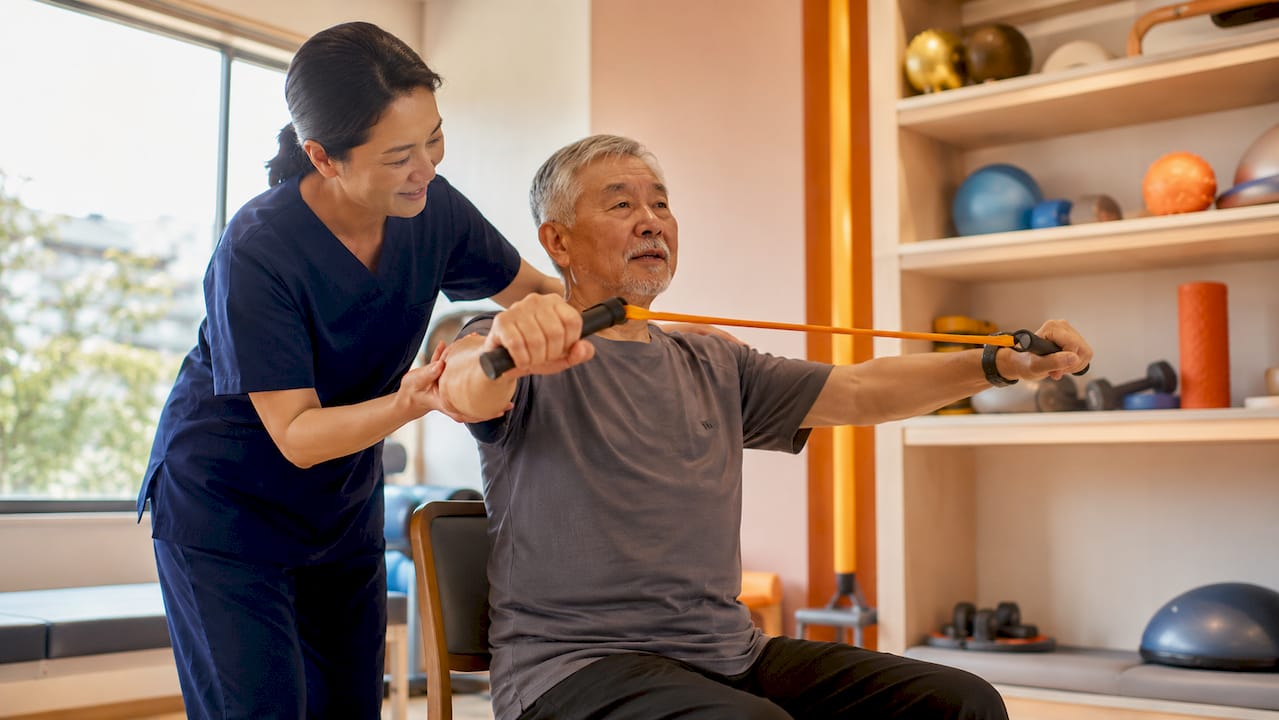
Outpatient physiotherapy is rehabilitation delivered through scheduled clinic visits aimed at restoring movement, reducing pain, and improving function without requiring hospital admission. The role of physiotherapy outpatient care covers everything from post-surgical recovery to chronic pain management, making it one of the most widely used rehabilitation pathways in modern healthcare. Patients attend structured sessions at a clinic or receive home visits, keeping their daily routines intact while working with qualified physiotherapists. Conditions like low back pain, joint replacement recovery, and sports injuries are among the most common reasons people seek this type of care.
What is the role of physiotherapy outpatient care?
Outpatient physiotherapy is defined as rehabilitation without hospital admission, where patients attend scheduled clinics or receive home visits while maintaining their daily routine. The physiotherapist’s role is to assess your condition, design a treatment plan, and guide you through exercises and education that translate into real improvements in daily life. This model works for a broad range of conditions, including musculoskeletal injuries, neurological conditions, and post-operative recovery from procedures like hip or knee replacement.
The core goal is function. Physiotherapists do not simply reduce pain in the clinic. They teach you how to move better, build strength, and manage symptoms independently over time. This patient education component is what separates outpatient physiotherapy from passive treatments like massage alone.

How are physiotherapy treatment plans structured?
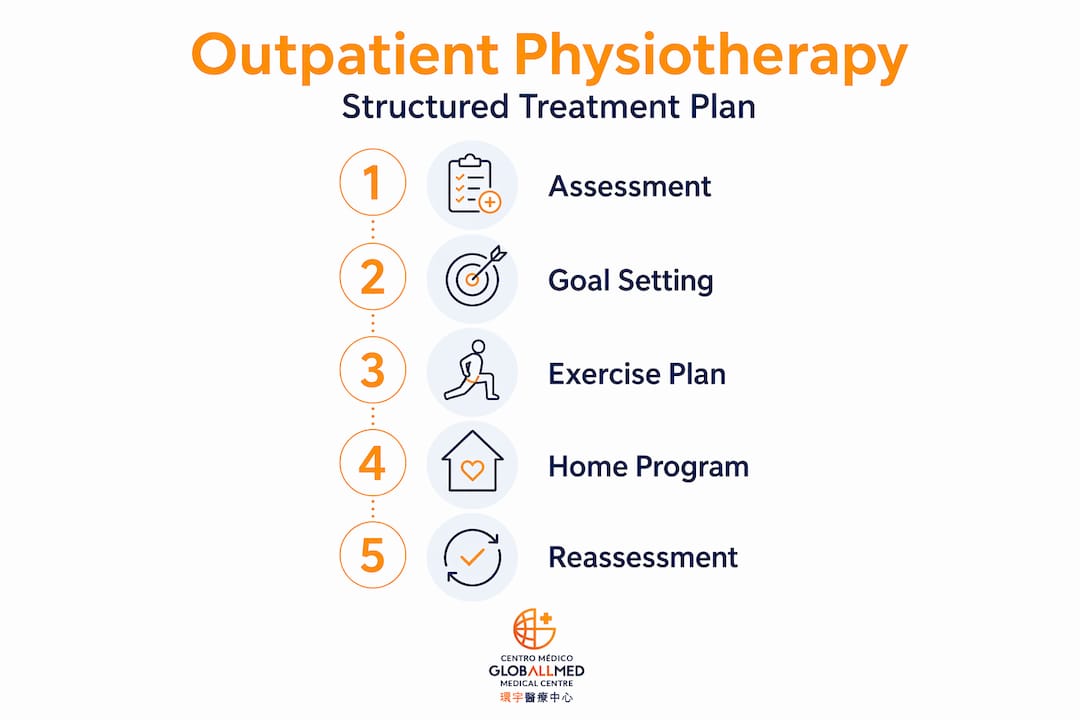
A well-built physiotherapy treatment plan follows a clear sequence: assessment, diagnosis, goal-setting, intervention, and reassessment. Each stage feeds into the next, and skipping any one of them weakens the whole program.
The core components of a standard outpatient physiotherapy plan include:
-
Assessment and diagnosis: The physiotherapist evaluates your movement, strength, pain levels, and functional limitations to establish a baseline.
-
SMART goals: Goals are specific, measurable, achievable, relevant, and time-bound. For example, “walk 500 meters without pain within six weeks” is a SMART goal.
-
Prescribed interventions: These include therapeutic exercises, manual therapy, and education tailored to your condition and lifestyle.
-
Home exercise programs: Clinic sessions alone are not enough. Home programs reinforce progress between visits and build independence.
-
Frequency and duration: Sessions are scheduled based on your condition’s severity and your response to treatment, typically ranging from once a week to several times a week.
-
Reassessment: Progress is measured at regular intervals using functional tests, and the plan is adjusted accordingly.
The emphasis on translating clinic gains into daily movements is what makes outpatient physiotherapy effective long-term. A patient who can perform a squat correctly in the clinic but cannot get up from a chair at home has not yet achieved the real goal.
Pro Tip: Ask your physiotherapist to explain the purpose of each exercise. Understanding why you are doing a movement increases the chance you will do it correctly at home.
How do delivery models affect outpatient physiotherapy outcomes?
Outpatient physiotherapy reaches patients through several pathways, and the model used affects both access and experience. The two most discussed models in current research are direct access and patient-initiated follow-up (PIFU).
| Delivery model | How it works | Key benefit | Key consideration |
|---|---|---|---|
| Physician referral | GP or specialist refers patient to physiotherapy | Coordinated care pathway | Can delay access |
| Direct access | Patient self-refers without a GP visit | Reduces GP workload and wait times | Requires red-flag screening protocols |
| Patient-initiated follow-up (PIFU) | Patient schedules own follow-up within a set window | Gives patients control over timing | Patient must act within 3 months or be discharged |
| Telerehabilitation | Sessions delivered via video or phone | Removes travel barriers | Evidence shows little difference from in-person care |
Direct access to physiotherapy without a medical referral reduces GP workload and resource use while maintaining similar clinical outcomes and patient satisfaction compared to physician referral. That finding matters because it means patients can get care faster without sacrificing quality.
Patient-initiated follow-up pathways let outpatients control their own scheduling, requiring patient action within 3 months to continue care or be discharged. Appointments under this model can be telephone, video, or face-to-face, with urgent issues directed to a GP or emergency services.
Safe implementation of direct access and PIFU models depends on clear red-flag screening and defined referral pathways. Without those safeguards, patients with serious underlying conditions could be missed. The safety of self-referral models relies on structured screening protocols, communication systems, and monitoring for workload changes.
Care delivered by physiotherapists versus doctors in outpatient rehab shows no meaningful difference in outcomes. That finding shifts the focus from who delivers care to how well they deliver it.
What are the benefits of outpatient physiotherapy for recovery?
The benefits of outpatient physiotherapy are well-supported by clinical research, particularly for musculoskeletal conditions and post-surgical recovery. The impact of physiotherapy on recovery goes beyond pain relief. It builds strength, restores movement patterns, improves confidence, and reduces the need for medication or surgery in many cases.
-
Pain reduction: Structured exercise programs reduce pain in conditions like low back pain, osteoarthritis, and rotator cuff injuries. Exercise adherence of 75% or more to American College of Sports Medicine (ACSM) guidelines produces significantly larger reductions in pain and disability in low back pain patients than low adherence. That gap in outcomes is driven entirely by whether patients follow through.
-
Improved mobility and strength: Physiotherapy restores range of motion and builds the muscle strength needed for daily tasks like climbing stairs, lifting, and walking.
-
Functional restoration: Outpatient physiotherapy teaches skills for daily activities, including home, school, and work tasks, with home exercise practice reinforcing progress between visits.
-
Reduced reliance on medication or surgery: Effective physiotherapy for chronic pain management can delay or eliminate the need for surgical intervention in conditions like knee osteoarthritis and lumbar disc problems.
-
Patient independence: Education and self-management strategies give patients the tools to manage their own symptoms over time, reducing long-term dependence on clinical care.
“The most effective outpatient physiotherapy programs are the ones patients actually do. Adherence is not a soft metric. It is the primary driver of outcomes.”
One finding worth noting: a large trial of 624 patients showed that a treat-to-target approach after hip or knee arthroplasty did not improve outcomes over usual care at 3 months. That result tells us that more complex protocols do not automatically produce better results. Consistent, well-delivered care outperforms elaborate systems with poor execution.
How do you track progress and stay on track in outpatient physiotherapy?
Adherence to prescribed exercises is the single biggest predictor of success in outpatient physiotherapy. Receiving a treatment plan is not the same as benefiting from one. Progress depends on what you do between sessions.
Physiotherapists track rehabilitation progress using functional tests tied to the SMART goals set at the start of care. These might include timed walking tests, range of motion measurements, or strength assessments. Measurable goals and functional tests are core components of effective outpatient plans, and they give both the patient and the clinician a clear picture of whether the program is working.
Here is what supports strong adherence and good outcomes:
-
Understand your home program. If you do not understand an exercise, ask for a demonstration and written instructions.
-
Track your sessions. A simple log of completed exercises helps you and your physiotherapist identify patterns and gaps.
-
Communicate symptoms. If pain increases significantly after an exercise, report it at your next session rather than stopping the program entirely.
-
Use follow-up tools. Remote check-ins and mobile apps can help prevent drop-offs in adherence, particularly when symptoms fluctuate.
-
Know when to escalate. New or worsening symptoms, especially neurological signs like numbness or weakness, warrant prompt contact with your physiotherapist or GP.
Pro Tip: Set a specific time each day for your home exercises, the same way you would a medication. Consistency beats intensity every time in rehabilitation.
Reassessment frequency should match your condition’s pace of change. Patients recovering from surgery may need weekly check-ins early on, while those managing chronic conditions might reassess every four to six weeks. Your physiotherapist should adjust the plan based on what the data shows, not just how you feel on a given day. For guidance on outpatient follow-up scheduling, structured pathways make a real difference in long-term outcomes.
Key Takeaways
Outpatient physiotherapy produces the best outcomes when structured treatment plans, consistent adherence, and appropriate delivery models work together from the first session onward.
| Point | Details |
|---|---|
| Adherence drives outcomes | Patients who follow prescribed exercises at 75% or more adherence see significantly greater pain and disability reduction. |
| Provider type matters less than quality | Physiotherapists and doctors produce similar outcomes; effective delivery is what counts. |
| Direct access speeds up care | Self-referral models reduce GP workload and wait times without compromising clinical results. |
| Complex protocols are not always better | A large trial showed treat-to-target approaches after arthroplasty produced no better results than usual care. |
| Home programs are non-negotiable | Clinic sessions alone are insufficient; home exercise practice is where real functional gains are built. |
What I have learned from watching outpatient physiotherapy work and fail
The research on outpatient physiotherapy is clearer than most people expect. The provider type matters far less than the quality of what gets delivered. A well-trained physiotherapist following a straightforward plan consistently outperforms a complex protocol delivered without engagement or explanation.
What I find most underappreciated is the adherence gap. Patients often assume that attending sessions is the active ingredient. The evidence says otherwise. The real work happens at home, between visits, with exercises that feel repetitive and unglamorous. That is where recovery is built or lost.
Direct access and patient-initiated follow-up models are genuinely useful innovations. They reduce barriers and give patients more control. But they only work when safety nets are in place. A patient who self-refers with undiagnosed inflammatory arthritis or a spinal tumor needs a system that catches that before it becomes a crisis. Innovation without screening protocols is not patient empowerment. It is a gap in care.
The most consistent pattern I have seen is this: patients who understand why they are doing each exercise, who have realistic SMART goals, and who have a clear plan for what to do when symptoms flare, recover faster and more completely than those who do not. Education is not a soft add-on to physiotherapy. It is the mechanism.
— IGHS
Physiotherapy outpatient care at GLOBALLMED Medical Center in Macau
GLOBALLMED Medical Center is Macau’s largest private outpatient clinic, offering a full range of physiotherapy and rehabilitation services designed to meet international standards.

Patients at GLOBALLMED Medical Center receive personalized physiotherapy treatment plans built around measurable goals and regular progress tracking. The clinical team works across musculoskeletal conditions, post-surgical recovery, and chronic pain management, with care pathways that prioritize your return to daily function. Whether you are recovering from a joint replacement or managing a long-term condition, GLOBALLMED Medical Center provides structured, evidence-based outpatient care in a setting built for international and local patients alike. Book an appointment through the GLOBALLMED Medical Center services page to get started.
FAQ
What does outpatient physiotherapy treat?
Outpatient physiotherapy treats musculoskeletal conditions like low back pain, joint injuries, and post-surgical recovery from procedures such as hip or knee replacement. It also addresses neurological and pediatric conditions where restoring movement and daily function is the primary goal.
How long does an outpatient physiotherapy program last?
Program length depends on the condition and your response to treatment, ranging from a few weeks for acute injuries to several months for complex post-surgical or chronic cases. Your physiotherapist sets a time-bound plan and adjusts it based on reassessment results.
Is direct access physiotherapy safe without a GP referral?
Direct access physiotherapy is safe when proper red-flag screening and referral protocols are in place. A systematic review confirms it maintains similar outcomes and patient satisfaction to physician-referred care.
How does adherence affect physiotherapy outcomes?
Patients who follow prescribed exercise programs at 75% or more adherence to ACSM guidelines show significantly larger reductions in pain and disability than those with low adherence. Adherence to home programs is the primary driver of recovery, not session attendance alone.
What is patient-initiated follow-up in physiotherapy?
Patient-initiated follow-up (PIFU) is a model where outpatients schedule their own follow-up appointments within a defined window, typically 3 months. It gives patients control over timing while maintaining access to care through telephone, video, or face-to-face appointments.