Role of a Pulmonologist in Outpatient Care Explained

A pulmonologist is a medical specialist who diagnoses and manages lung and respiratory diseases, and the role of pulmonologist in outpatient care centers on evaluating symptoms, ordering targeted tests, and building long-term treatment plans without hospital admission. Pulmonologists handle conditions like COPD, asthma, sleep apnea, pulmonary fibrosis, and pulmonary hypertension. They use tools including spirometry, chest CT scans, and overnight sleep studies to guide every decision. Patients who see a pulmonologist in an outpatient clinic get specialist-level respiratory care that goes well beyond what a primary care visit can offer.
What is the role of a pulmonologist in outpatient care?
A pulmonologist’s core function in an outpatient setting is to evaluate respiratory function, interpret diagnostic tests, and manage both acute and long-term respiratory diseases. That means they do far more than prescribe an inhaler. They determine whether a patient’s breathing problem is obstructive, restrictive, or related to airway hyperreactivity, and they build a treatment plan around that finding.

Outpatient pulmonology clinics handle a wide range of chronic respiratory diseases, including asthma, lung fibrosis, pulmonary hypertension, and lung cancer staging. Each of these conditions requires a different diagnostic approach and a different long-term management strategy. A pulmonologist brings the specialized knowledge to tell them apart and treat them correctly.
The outpatient setting matters because it allows for early diagnostic testing and management before a condition becomes severe enough to require hospitalization. Early evaluation clarifies the cause of symptoms and supports targeted therapy. Waiting until a condition is critical costs patients time, lung function, and quality of life.
What conditions do pulmonologists manage in outpatient settings?
Pulmonologists manage a broad set of respiratory conditions in outpatient clinics. Knowing which conditions qualify for specialist care helps patients understand when a referral is the right next step.
Conditions commonly managed in outpatient pulmonology:
- COPD. Pulmonologists provide specialty expertise for COPD when diagnosis is uncertain, disease is severe, or surgical and bronchoscopic interventions need evaluation.
- Asthma. Difficult-to-control asthma that does not respond to standard primary care treatment requires specialist assessment to rule out other causes and adjust therapy.
- Chronic cough. A cough lasting longer than 8 weeks warrants a pulmonology referral to identify the underlying cause, which may include airway inflammation, reflux, or structural abnormalities.
- Pulmonary nodules. Abnormal findings on chest imaging require follow-up evaluation and, in some cases, staging for lung cancer.
- Sleep-disordered breathing. Conditions like obstructive sleep apnea are evaluated and managed through outpatient sleep studies.
- Pulmonary fibrosis and interstitial lung disease. These progressive conditions need specialist monitoring and treatment adjustment over time.
Referral to a pulmonologist is appropriate when symptoms persist or worsen despite primary care, when imaging is abnormal, or when asthma or COPD is difficult to control. Primary care providers are well equipped to detect and manage stable respiratory conditions. Pulmonologists step in when the picture becomes complex or unclear.
Pro Tip: If you have had a cough for more than 8 weeks, or if your doctor found something unusual on a chest X-ray, ask for a pulmonology referral rather than waiting for a follow-up primary care visit.
What diagnostic tests do pulmonologists perform during outpatient visits?
Outpatient pulmonology visits are built around choosing the right tests to answer a specific clinical question. The goal is to differentiate obstructive from restrictive disease, detect airway hyperreactivity, and guide long-term therapy decisions with objective data.
| Test | What it measures | When it is used |
|---|---|---|
| Spirometry | Airflow and lung volume | First-line test for asthma and COPD |
| Methacholine challenge | Airway hyperreactivity | Rules in or out asthma when spirometry is normal |
| Chest X-ray / CT scan | Structural lung changes, nodules | Abnormal imaging findings, suspected fibrosis or cancer |
| Home or in-lab sleep study | Breathing patterns during sleep | Suspected sleep apnea or other sleep-disordered breathing |
| Bronchoscopy | Airway visualization and sampling | Planned when results will change management |
Pulmonary function testing, including spirometry and methacholine challenge, is the backbone of outpatient respiratory evaluation. These tests produce objective numbers that tell the pulmonologist exactly how well the lungs are working and where the problem lies.
Sleep studies are a key part of outpatient pulmonology for patients with suspected sleep apnea. Home sleep studies are convenient and accurate for most patients. In-lab studies provide more detailed data when the clinical picture is complex.
Bronchoscopy is typically deferred to a separate appointment and only scheduled when the results will directly influence the treatment plan. Pulmonologists do not perform invasive procedures unless they are necessary. That approach keeps outpatient visits focused and efficient.
Pro Tip: Bring a list of all medications, including inhalers and over-the-counter drugs, to your first pulmonology appointment. Some medications affect spirometry results and need to be noted before testing.
How do pulmonologists collaborate with other healthcare providers?
Pulmonary care management works best as a team effort. A pulmonologist does not operate in isolation. They function as both a specialist consultant and a team leader for complex respiratory cases, coordinating with multiple providers to deliver complete care.
COPD care requires an interprofessional team where primary care manages stable disease and pulmonologists handle complex aspects. That division of responsibility keeps care efficient and prevents unnecessary specialist visits for patients who are doing well.
The outpatient respiratory care team typically includes:
- Primary care providers who detect symptoms early, manage stable conditions, and refer patients when complexity increases.
- Respiratory therapists who deliver patient education on inhaler technique, breathing exercises, and oxygen therapy.
- Pharmacists who review medication regimens, check for drug interactions, and support treatment adherence in patients managing multiple conditions.
- Nurses who coordinate follow-up appointments, monitor symptom changes, and provide ongoing patient support.
- Surgeons and interventional specialists who are brought in when a pulmonologist determines that a procedure like lung resection or bronchoscopic intervention is needed.
Patients benefit from this model because no single provider carries the full burden of a complex chronic condition. Each team member contributes a specific skill set. The pulmonologist ties those contributions together into a single, coherent treatment plan. For patients managing chronic respiratory conditions like COPD or pulmonary fibrosis, that coordination is what makes long-term stability possible.
What should patients expect during an outpatient pulmonology visit?
Knowing what happens during a pulmonology appointment reduces anxiety and helps patients prepare. The first visit follows a clear structure, and understanding it makes the experience more productive.
-
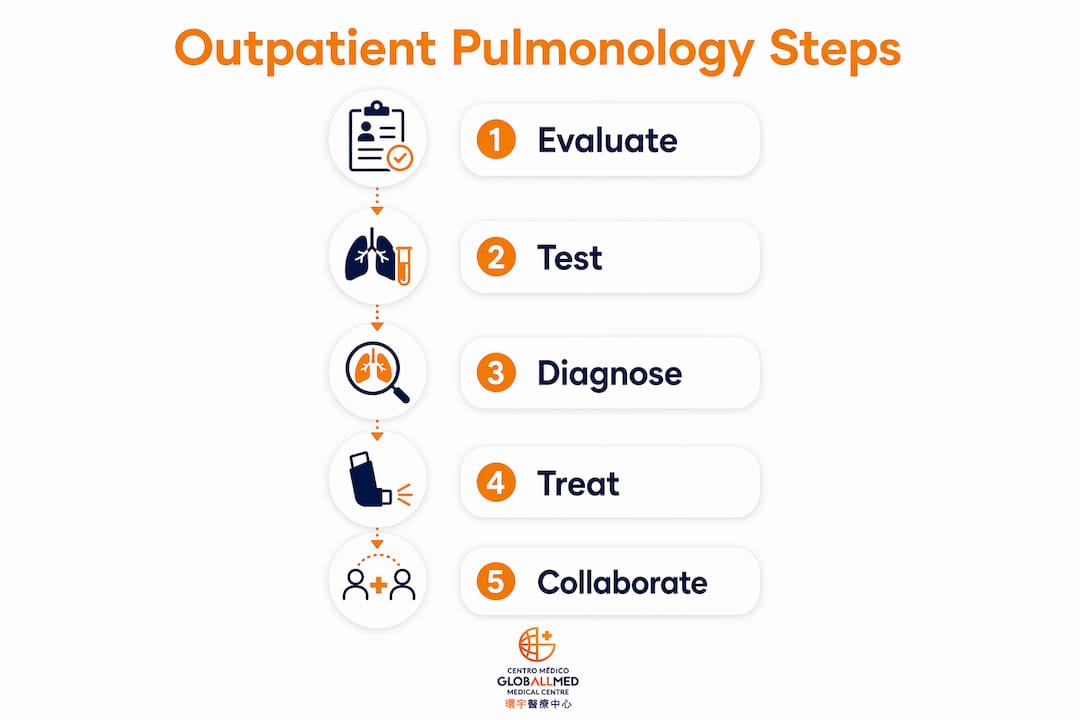
Symptom and history review. The pulmonologist begins by asking detailed questions about your breathing symptoms, how long they have been present, what makes them better or worse, and your full medical and medication history. This conversation shapes every decision that follows.
-
Physical examination. The pulmonologist listens to your lungs, checks your breathing rate, and looks for physical signs of respiratory disease such as reduced breath sounds or abnormal chest movement.
-
Diagnostic test decisions. Based on the history and exam, the pulmonologist decides which tests to order. Outpatient visits focus on noninvasive testing first. Spirometry may be done the same day. Imaging or sleep studies are usually scheduled as separate appointments.
-
Procedure planning. If bronchoscopy or another invasive procedure is needed, the pulmonologist explains why, what it involves, and when it will be scheduled. Procedures are only recommended when they will change the treatment plan.
-
Personalized treatment plan. Once test results are available, the pulmonologist builds a treatment plan specific to your diagnosis. That plan may include medications, inhalers, oxygen therapy, lifestyle changes, or referrals to other specialists.
-
Follow-up schedule. Outpatient pulmonology is ongoing. The pulmonologist sets a follow-up schedule to monitor your response to treatment and adjust the plan as needed. Patients with chronic conditions like COPD or asthma typically return every 3 to 6 months.
Patients can review common outpatient concerns before their visit to feel more prepared. The more information you bring to the appointment, the more targeted and useful the evaluation will be.
Key Takeaways
The role of a pulmonologist in outpatient care is to diagnose complex respiratory conditions, perform targeted testing, and coordinate long-term treatment with a multidisciplinary team before hospitalization becomes necessary.
| Point | Details |
|---|---|
| Specialist scope | Pulmonologists manage COPD, asthma, fibrosis, sleep apnea, and pulmonary nodules beyond primary care capacity. |
| Referral timing | See a pulmonologist when a cough exceeds 8 weeks, imaging is abnormal, or primary care treatment is not working. |
| Key diagnostics | Spirometry, methacholine challenge, CT scans, and sleep studies guide every outpatient treatment decision. |
| Team-based care | Respiratory therapists, pharmacists, nurses, and primary care providers all support the pulmonologist’s treatment plan. |
| First visit focus | Initial appointments center on history, noninvasive testing, and planning. Invasive procedures are scheduled only when necessary. |
Why early outpatient pulmonology matters more than most patients realize
Most patients assume a pulmonologist is only for the very sick. That assumption delays diagnosis and costs people lung function they will never recover.
The reality is that outpatient pulmonology clinics are built for early evaluation. A patient with a persistent cough, mildly abnormal spirometry, or a small pulmonary nodule is exactly the right candidate for an outpatient visit. Catching these findings early means treatment starts before irreversible damage occurs.
What I find most striking in outpatient respiratory care is how often the diagnosis changes after a specialist evaluation. A patient labeled as having “asthma” by a primary care provider turns out to have vocal cord dysfunction or eosinophilic bronchitis. A patient told their COPD is “mild” turns out to have significant airflow limitation on full pulmonary function testing. The specialist evaluation does not just confirm what primary care found. It often corrects it.
The multidisciplinary model is also underappreciated. Respiratory therapists who teach proper inhaler technique, pharmacists who catch dangerous drug interactions, and nurses who follow up on symptom changes all contribute to outcomes that no single physician can achieve alone. Pulmonologists who build and lead these teams consistently produce better long-term results than those who work in isolation.
The challenge in outpatient pulmonology is patient delay. People tolerate breathlessness and chronic cough for years before seeking specialist care. By the time they arrive, the disease has often progressed significantly. The single most effective thing a patient can do is act on persistent symptoms early, not wait until breathing becomes a daily crisis.
— IGHS
Respiratory care at GLOBALLMED Medical Center
GLOBALLMED Medical Center offers outpatient medical clinic services in Macau with a clinical team equipped to evaluate and manage respiratory conditions including COPD, asthma, chronic cough, and sleep-disordered breathing.

Patients at GLOBALLMED Medical Center have access to diagnostic testing, specialist consultations, and coordinated follow-up care under one roof. The center serves both local and international patients, with appointment booking available for those seeking respiratory evaluation in Macau. If you have been experiencing persistent breathing symptoms or received an abnormal chest imaging result, scheduling an outpatient consultation is the right first step. Visit GLOBALLMED Medical Center to review available services and book your appointment.
FAQ
What does a pulmonologist do in an outpatient clinic?
A pulmonologist diagnoses and manages lung and airway conditions by evaluating respiratory function, interpreting diagnostic tests, and building long-term treatment plans. Outpatient visits focus on noninvasive testing and specialist consultation rather than hospital-based procedures.
When should I see a pulmonologist instead of my primary care doctor?
See a pulmonologist when a cough has lasted longer than 8 weeks, when imaging shows abnormal findings, or when asthma or COPD is not responding to standard treatment. Primary care handles initial detection and stable management; pulmonologists step in for complex or unclear cases.
What tests are done during an outpatient pulmonology visit?
Spirometry and methacholine challenge testing are the most common first-line tests. Chest X-rays, CT scans, and sleep studies are ordered based on your specific symptoms. Invasive procedures like bronchoscopy are scheduled separately and only when they will change the treatment plan.
How does a pulmonologist work with my other doctors?
Pulmonologists function as specialist consultants within a care team that includes primary care providers, respiratory therapists, pharmacists, and nurses. Each team member manages a specific part of your care, and the pulmonologist coordinates the overall treatment plan for complex conditions.
Is outpatient pulmonology only for severe lung disease?
No. Outpatient pulmonology clinics are designed for early evaluation and management of conditions like asthma, chronic cough, and pulmonary nodules. Early referral clarifies diagnosis and supports targeted therapy before a condition becomes severe.