What Is a Medical Specialist Network? A Patient Guide

A medical specialist network is defined as an organized group of licensed healthcare professionals, each credentialed in a specific medical discipline, contracted to deliver coordinated specialty care under shared quality and cost standards. These networks sit at the center of modern healthcare delivery, connecting patients to the right specialist at the right time while keeping care accountable. Accountable care organizations (ACOs), value-based care frameworks, and institutions like GLOBALLMED Medical Center all rely on specialist network structures to improve patient outcomes. Understanding how these networks work gives you a direct advantage when making healthcare decisions.
What is a medical specialist network and how does it work?
A medical specialist network is not simply a list of doctors. It is a coordinated clinical system where specialists are selected, vetted, and held accountable through shared performance standards. The network includes primary care providers, subspecialists, diagnostic facilities, and administrative coordinators who communicate across every stage of a patient’s care.
High-performance specialty networks use episode-based data tracking to identify specialists with better outcomes and cost efficiency. This means the network analyzes a patient’s full care episode, from initial diagnosis through recovery, to measure which specialists deliver the best results at the lowest complication rate.

The operational model depends on clinical integration, not just administrative contracting. Specialty networks focus on clinical integration to improve care beyond simple administrative agreements. That distinction matters because a network built only on contracts cannot guarantee quality. A network built on outcome data can.
Effective specialty networks establish clear accountability boundaries and communication processes between primary and specialty physicians to prevent costly care gaps. Without these hand-off protocols, patients fall through the cracks between referral and follow-up. The result is higher complication rates and avoidable readmissions.
Pro Tip: When you receive a referral, ask your primary care provider whether the specialist belongs to a high-performance network with documented outcome data, not just an in-network contract.
How do specialist networks benefit patients?
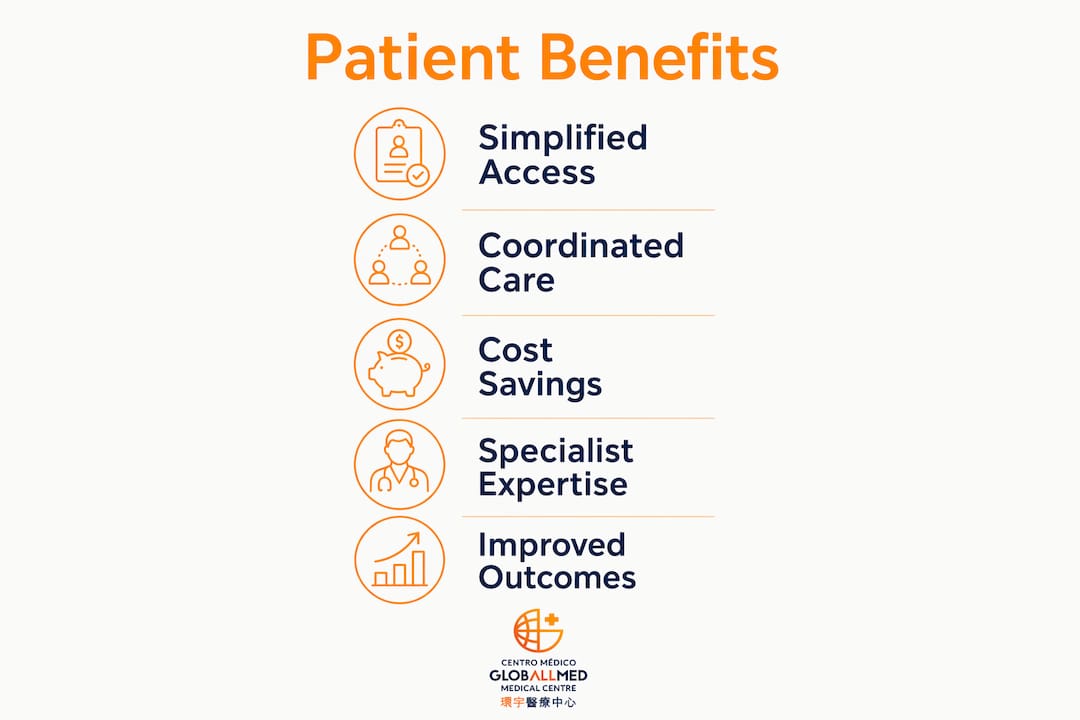
The benefits of specialist networks extend well beyond convenience. Patients who receive care within a well-structured network experience lower complication rates, reduced costs, and faster access to the precise expertise their condition requires.
- Lower complication rates. Networks use real-world clinical data to select specialists with proven surgical and procedural outcomes. Patients treated by network-vetted specialists benefit from this selection process directly.
- Reduced out-of-pocket costs. In-network providers have negotiated rates with insurance plans, resulting in lower patient costs compared to out-of-network providers. Some plans strictly require in-network use to avoid high cost-sharing.
- Access to subspecialty expertise. Broad specialty coverage is insufficient for many complex diagnoses. Precision in subspecialty network design is critical, because a patient with a rare autoimmune condition needs a rheumatologist with subspecialty experience, not a general internist.
- Coordinated care transitions. Networks define how information moves between providers. A patient moving from a surgeon to a rehabilitation specialist within the same network receives a structured hand-off, not a phone call that may never happen.
The cost benefit alone changes how patients plan their care. When you know your specialist is in-network, you can schedule without fear of surprise billing. For patients managing chronic conditions or complex diagnoses, that financial predictability is significant. GLOBALLMED Medical Center structures its specialist care services around this same principle of coordinated, cost-transparent access.
How can patients find and verify specialists within a network?
Finding the right specialist within a network requires more than a quick online search. Directories go out of date, and an incorrect assumption about network status can result in large unexpected bills.
- Start with your insurance provider’s directory. Most insurers maintain an online physician database filtered by specialty, location, and plan type. This is the fastest first step for identifying candidates.
- Call the provider’s office directly. Publicly available directories can have outdated information. Best practice is to call the doctor’s office with your insurance ID and group number to confirm current in-network participation before scheduling.
- Ask your primary care provider for a referral. Primary care physicians within a specialist network have direct relationships with vetted subspecialists. A referral from within the network carries clinical context that a cold directory search cannot provide. The Macau clinic referral guide from GLOBALLMED Medical Center outlines this process clearly for patients navigating specialist care.
- Verify credentials and subspecialty focus. Confirm that the specialist’s training and practice focus match your specific diagnosis. A cardiologist who primarily treats arrhythmia may not be the right choice for a structural heart condition.
- Check network adequacy requirements. Medical provider networks must meet state regulatory standards for network adequacy, including provider availability and timely access across primary care, mental health, women’s healthcare, and emergency services. Knowing these standards helps you identify gaps in your coverage.
Pro Tip: Save a record of every network verification call, including the date, the representative’s name, and the confirmation number. This documentation protects you if a claim is later disputed.
What are the structural challenges and future trends in specialist networks?
Specialist networks face real operational challenges that affect the quality of care patients receive. Understanding these challenges helps you evaluate whether a network is genuinely high-performing or simply large.
| Challenge | Current State | Emerging Solution |
|---|---|---|
| Subspecialty adequacy mapping | Many networks track general specialties only | Plans now map adequacy at subspecialty level for complex diagnoses |
| Data quality for vetting | Episode-level data is difficult to link across systems | Integrated analytics platforms connect clinical events to individual patient episodes |
| Specialist onboarding speed | Traditional vetting relies on synchronous phone calls | AI-enabled, self-serve workflows allow faster expert registration |
| Payment model alignment | Fee-for-service creates misaligned incentives | CMS models like TEAM and ASM tie specialist payment to episode outcomes |
| Care gap prevention | Hand-offs between primary and specialty care are inconsistent | Defined accountability boundaries reduce post-surgical complications |
Plans that prioritize subspecialty adequacy outperform those focused only on general specialties. That gap in performance becomes visible when a patient with a complex diagnosis cannot access the right subspecialist within their plan’s network.
Self-serve and AI-enabled vetting workflows allow specialist networks to onboard experts outside traditional operational hours. This shift from synchronous calls to expert-initiated processes improves specialist registration rates and accelerates network expansion. The practical result for patients is faster access to newly credentialed specialists.
High-performance specialty networks require data analytics capable of linking clinical events and costs to individual patient episodes for continuous quality improvement. Networks that cannot perform this analysis cannot reliably identify their best-performing specialists. Patients in those networks receive care based on availability, not proven outcomes.
Key Takeaways
A medical specialist network improves patient outcomes by combining vetted subspecialty expertise, episode-based performance data, and coordinated care transitions within a single accountable system.
| Point | Details |
|---|---|
| Definition and purpose | A specialist network is a coordinated group of credentialed providers held to shared quality and cost standards. |
| How networks select specialists | High-performance networks use episode-based outcome data, not just contracts, to identify top specialists. |
| Patient cost benefits | In-network negotiated rates reduce out-of-pocket costs; some plans require in-network use to avoid high charges. |
| How to verify network status | Always call the provider’s office directly with your insurance details before scheduling an appointment. |
| Future of specialist networks | AI-enabled vetting and subspecialty adequacy mapping are raising the standard for network quality and access. |
Why reputation alone is not enough when choosing a specialist
Patients consistently overestimate what “in-network” means. Being listed in a network directory confirms a contractual relationship. It does not confirm that the specialist has the best outcomes for your specific condition.
I have seen this distinction matter most in surgical specialties and behavioral health, where outcome variation between providers is wide and rarely visible to patients. A network that tracks episode-level data can tell you which orthopedic surgeon has the lowest 90-day complication rate for knee replacement. A network that only tracks contracts cannot.
The practical implication is this: ask harder questions. When you receive a referral, ask whether the specialist’s outcomes have been reviewed against network benchmarks. Ask whether your primary care provider has a direct communication protocol with that specialist. These questions are not unreasonable. They are the standard that high-performance specialty networks are built to answer.
Patients who engage with certified institutions that apply these standards receive measurably better care. The difference is not theoretical. It shows up in complication rates, recovery times, and total treatment costs. Choosing a network-affiliated center that tracks these metrics is one of the most concrete steps you can take toward better health outcomes.
— IGHS
GLOBALLMED Medical Center and specialist network access in Macau
GLOBALLMED Medical Center operates as Macau’s largest private outpatient clinic, built around a coordinated specialist care model that reflects the standards described throughout this article.
The center’s medical specialty departments cover a wide range of clinical disciplines, each staffed by credentialed specialists and supported by structured referral and communication protocols. Patients benefit from in-center coordination between primary care and subspecialty providers, reducing the gaps that typically occur when care is fragmented across unconnected providers. GLOBALLMED Medical Center also serves international patients, making it a practical choice for medical travelers seeking verified specialist access in the region. To review available services and schedule an appointment, visit the GLOBALLMED services page.
FAQ
What is a medical specialist network in simple terms?
A medical specialist network is a group of credentialed healthcare providers organized to deliver coordinated specialty care under shared quality and cost standards. Patients who use in-network specialists typically receive better-coordinated care and lower out-of-pocket costs.
How does a specialist network differ from a regular doctor’s list?
A specialist network goes beyond a directory by applying outcome data, vetting criteria, and care coordination protocols to select and manage its providers. High-performance networks track patient episodes from diagnosis through recovery to measure specialist performance.
Why should patients verify in-network status before an appointment?
Online directories can be outdated and may not reflect real-time network changes. Calling the provider’s office directly with your insurance ID and group number is the only reliable way to confirm current in-network participation.
What types of specialists are typically included in a medical network?
Medical networks include primary care physicians, surgeons, behavioral health providers, dermatologists, and a range of subspecialists depending on the plan’s adequacy requirements. Regulatory standards require coverage across primary care, mental health, women’s healthcare, and emergency services.
How do AI and data analytics improve specialist networks?
AI-enabled vetting workflows allow networks to onboard specialists faster and outside traditional business hours. Episode-based data analytics link clinical outcomes and costs to individual patients, enabling networks to identify and retain their highest-performing specialists.