
Explain Health Risk Assessment: A Practical Guide

Most people assume a health risk assessment tells you whether you’re sick. That’s the wrong way to think about it. When you explain health risk assessment accurately, it’s a structured screening tool designed to identify your personal risk factors before disease takes hold. It collects information about your lifestyle, medical history, and biometric data to give both you and your provider a clearer picture of what needs attention. This guide covers what HRAs are, how they work, who uses them, and how to get the most value from one.
Table of Contents
- Key takeaways
- What a health risk assessment actually is
- The health risk assessment process
- Why health risk assessments matter in preventive care
- Misconceptions and how to interpret your results
- How to conduct or participate in an HRA
- My perspective on the real value of HRAs
- Start your health assessment at Globallmed
- FAQ
Key takeaways
| Point | Details |
|---|---|
| HRAs are screening tools | They identify risk factors and motivate behavior change, not diagnose conditions. |
| Questionnaires plus biometrics | Standard HRAs combine lifestyle questions with physical measurements like blood pressure and weight. |
| Four core process steps | Hazard identification, dose-response, exposure assessment, and risk characterization form the HRA framework. |
| Context matters for results | Single high-risk indicators require clinical follow-up, not self-diagnosis. |
| Action drives the value | An HRA only produces benefit when results are reviewed with a provider and built into a care plan. |
What a health risk assessment actually is
The simplest way to explain health risk assessment is this: it’s a questionnaire combined with physical data that produces a personalized health report showing where your risks are concentrated. Standard individual HRAs contain about 30 questions and take under 10 minutes to complete, covering demographics, lifestyle habits, emotional health, and physical health history.
What separates a good HRA from a generic wellness survey is the integration of biometric data. Blood pressure readings, weight, cholesterol levels, and glucose measurements give clinical weight to the self-reported answers. A person might report eating well but show elevated cholesterol. That gap is exactly where an HRA adds value.
Here’s what a standard HRA typically covers:
- Demographics: Age, sex, family history, and existing diagnosed conditions
- Lifestyle factors: Tobacco use, alcohol consumption, physical activity frequency, and diet quality
- Emotional and mental health: Stress levels, sleep quality, mood patterns, and depression indicators
- Physical health history: Previous diagnoses, medications, and recent symptoms
- Biometrics: Blood pressure, body mass index, cholesterol, and fasting glucose
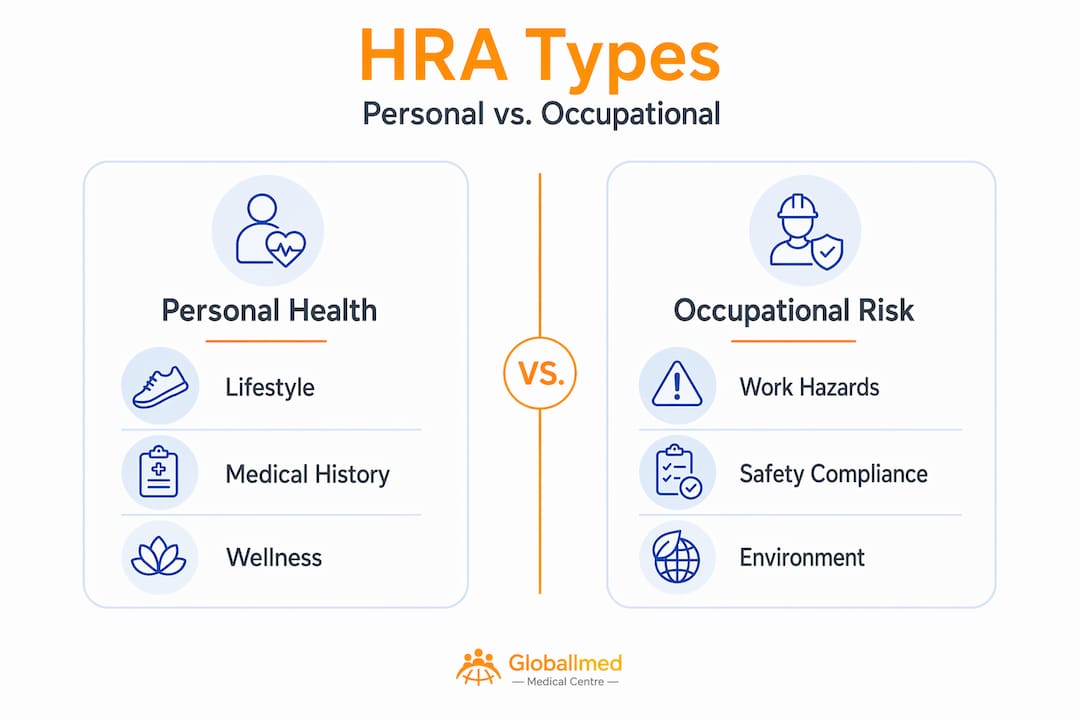
One distinction worth making clearly: personal health HRAs focus on lifestyle and medical history, while occupational risk assessments target external hazards, legal compliance, and exposure controls. They share a name but serve different purposes. A warehouse safety audit and a Medicare wellness questionnaire are not the same tool.
The health risk assessment process
Understanding the health risk assessment process helps you see why it works the way it does. The structure is not arbitrary. Agencies like the EPA and CDC apply a four-step risk evaluation framework for environmental and occupational hazard work. That same logic translates well to individual health contexts.
- Hazard identification: What potential health risks exist based on your history, behaviors, and environment?
- Dose-response assessment: At what level does a risk factor become clinically significant? Occasional stress differs from chronic daily stress with physical symptoms.
- Exposure assessment: How frequently and intensely are you exposed to those risk factors? A smoker of 20 years carries different risk than someone who quit last year.
- Risk characterization: The findings are combined to quantify overall risk and produce a report that prioritizes where intervention is needed most.
For individuals enrolled in Medicare, the process has a specific structure. 2026 CMS guidance mandates 13 required elements for the Annual Wellness Visit, which incorporates a formal HRA as its foundation.
| Medicare AWV element | What it captures |
|---|---|
| Vital signs and physical measurements | Height, weight, blood pressure, BMI |
| Cognitive assessment | Memory, orientation, and reasoning |
| Depression screening | Validated screening tools like PHQ-2 or PHQ-9 |
| Substance use review | Alcohol, tobacco, and medication misuse |
| Functional ability | Mobility, ADLs, and fall risk |
| Written care plan | Personalized preventive recommendations and screening schedule |
The Medicare AWV also encourages optional physical activity and nutrition risk assessments as supplemental elements following evidence-based standards. The result is a layered picture of health that no single lab test or symptom check can provide on its own.
Why health risk assessments matter in preventive care
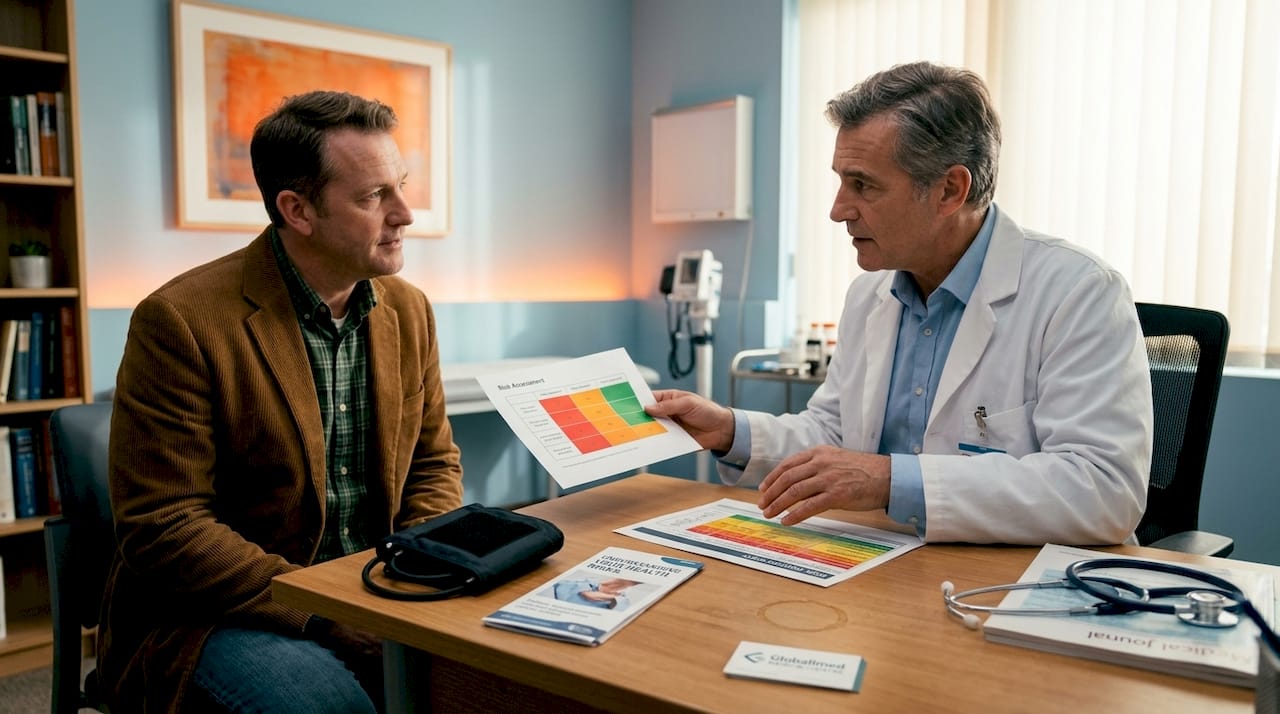
The importance of health risk assessment becomes most obvious when you think about the conditions that kill people most. Heart disease, type 2 diabetes, certain cancers. These don’t appear overnight. They develop across years of accumulated risk. An HRA catches the early signals when behavior change or clinical intervention can still make a material difference.
Beyond individual benefit, HRAs help identify high-risk, high-cost populations in Medicare and employer programs, allowing for targeted interventions rather than blanket outreach. A company running a wellness program can use aggregated HRA data to see that 30% of employees report chronic sleep deprivation and poor diet. That population-level signal informs which programs to fund.
In workplace safety, the calculus is more direct. Effective risk assessments must lead to action. Documentation without implemented controls becomes a liability rather than a benefit. This is one of the most common organizational failures: completing the assessment and stopping there. In clinical practice, the same failure occurs when providers collect HRA data at intake and never revisit it.
Pro Tip: If you complete an HRA through an employer wellness program, request a printed or digital copy of your results. Bring it to your next primary care visit, even if it wasn’t ordered by that provider. Your doctor can spot patterns in the data you might miss.
Applications of HRAs span multiple settings:
- Primary care: HRAs structure the annual wellness visit and guide which screenings to prioritize
- Occupational health: Employers use HRAs to identify physical and mental health risks across their workforce
- Population health management: Health plans use aggregated data to target interventions toward high-risk members
- Preventive cardiology: Risk scores derived from HRA data help predict 10-year cardiovascular event probability
- Corporate wellness programs: HRAs serve as the entry point for employee health coaching
For more on how health screening fits prevention, the benefits become clearest when assessments are treated as the beginning of a process, not a check-the-box exercise.
Misconceptions and how to interpret your results
Here’s where most people go wrong. They receive an HRA result showing one or two elevated risk indicators and either panic or ignore it entirely. Both responses miss the point.
Single high-risk indicators from HRAs require clinical correlation to avoid misinterpretation and false positives. A flagged result for cardiovascular risk based on blood pressure and family history does not mean you’re having a heart attack. It means that risk factor is worth exploring further with a provider who can order the right follow-up tests.
The core issue is this: HRAs are screening tools designed to motivate behavior change and improve physician-patient communication, not standalone diagnostic instruments. Their value is fully realized only when the feedback is actively discussed and integrated into routine care. That conversation with your provider is where the real work happens.
Meaningful value from an HRA arises only when providers review results and integrate them into a comprehensive care plan. The questionnaire is the start, not the conclusion.
Pro Tip: Before your next healthcare visit, complete any available HRA your provider or health plan offers. Review your results beforehand so you can ask specific questions rather than relying on a general checkup format.
Clinical professionals consistently advise against relying solely on self-screening tools without contextual interpretation from a comprehensive physical exam. An HRA showing low physical activity, elevated stress, and a family history of diabetes tells a meaningful story. But it takes a clinician to decide what the next step looks like for that specific person.
Reading your results well means looking for patterns across multiple flagged areas, not fixating on one data point. Three minor flags pointing in the same direction are far more informative than a single alarming number. That’s the clinical judgment an HRA supports, not replaces.
How to conduct or participate in an HRA
Whether you’re an individual completing one for the first time or a healthcare professional integrating HRAs into your practice, the steps in health risk assessment follow a logical sequence.
- Gather your information before you start. Know your current medications, recent blood pressure readings if you have them, family medical history, and a rough sense of your weekly activity and diet patterns. Vague answers reduce the accuracy of your results.
- Complete the questionnaire honestly. HRAs are confidential. Underreporting alcohol use or overstating physical activity skews your risk profile in ways that hurt only you.
- Submit biometric data if required. Many workplace and Medicare HRAs include an on-site screening where basic vitals are collected. This step significantly improves the quality of your risk report.
- Review your personalized feedback report. Identify the top two or three flagged areas. Note which are lifestyle-modifiable (activity, diet, smoking) versus those requiring clinical follow-up (elevated glucose, blood pressure).
- Share results with your provider. This step is non-negotiable. A provider reviewing your annual medical review can integrate HRA findings into your broader care plan with far more nuance than a report algorithm can.
- Follow up on flagged items. Book any recommended screenings within 30 days of your HRA if possible. Momentum matters. Waiting months diminishes the motivational effect.
Pro Tip: If you’re a healthcare professional incorporating HRAs into patient visits, build in five minutes at the start of each annual visit to review the patient’s completed HRA before entering the room. That preparation changes the entire quality of the conversation.
For those using health screening to maximize prevention, the HRA works best as the entry point to a broader screening calendar, not as a standalone effort.
My perspective on the real value of HRAs
I’ve read a lot of health risk assessment reports over the years, and the pattern I keep seeing is this: the tool gets blamed for problems that belong to the process around it.
An HRA that gets completed during onboarding and never reviewed again is not a failed tool. It’s a failed process. The assessment itself is well-designed. The surrounding system let it down. That distinction matters because it changes where you focus your energy when trying to improve outcomes.
What I’ve come to believe is that HRAs are primarily communication tools, not data collection tools. Their biggest return comes not from the risk scores they generate but from the conversations they start. A patient who sees their own risk factors listed on paper responds differently than one who hears the same information verbally. There’s something about seeing it in writing that shifts the conversation.
The other thing I’d push back on is the idea that HRAs are only useful for sick people or high-risk populations. I’ve seen people in their 30s with no diagnosed conditions complete an HRA and come out of the provider conversation genuinely motivated to change something. That’s not a small outcome. Prevention that actually changes behavior is expensive to achieve any other way.
The data-driven population health angle is real too. Using HRAs to identify high-risk cohorts for targeted outreach is where a lot of the cost-effectiveness lives. But that value only materializes if someone acts on the aggregated findings.
— IGHS
Start your health assessment at Globallmed

If this guide has helped clarify what a health risk assessment is and why it matters, the logical next step is completing one with a qualified clinical team behind you. Globallmed, Macau’s largest private outpatient clinic, offers comprehensive health screenings and preventive care services designed to give you a real, actionable picture of your health.
The medical clinic department at Globallmed provides general consultations, specialist referrals, and wellness assessments conducted by experienced physicians who integrate your results into a personalized care plan. Whether you’re a local resident or visiting Macau for medical care, Globallmed’s team is equipped to support both individual wellness goals and more complex clinical needs. Book your appointment online and take your health risk evaluation from a form on a screen to a conversation that actually changes something.
FAQ
What is a health risk assessment?
A health risk assessment is a structured questionnaire combined with biometric data that identifies an individual’s personal health risk factors and produces a feedback report to guide preventive care decisions.
How long does a health risk assessment take?
Standard individual HRAs contain about 30 questions and take under 10 minutes to complete, though some include an additional on-site biometric screening component.
Can an HRA diagnose a medical condition?
No. HRAs are screening tools, not diagnostic instruments. They flag areas of elevated risk and motivate behavior change, but clinical diagnosis requires a provider evaluation and appropriate follow-up testing.
What are the steps in health risk assessment?
The core steps are hazard identification, dose-response assessment, exposure assessment, and risk characterization. For individual health contexts, this translates to completing a questionnaire, collecting biometric data, receiving a personalized report, and following up with a provider.
Why should I share my HRA results with my doctor?
HRA value is fully realized only when a provider reviews the results and integrates them into a care plan. Without clinical context, risk scores can be easily misread or ignored.