
Lower Back Pain Physiotherapy: Your Home Routine Guide

Physiotherapy relieves lower back pain by combining tailored exercise, manual techniques, and patient education to reduce pain and restore function. Start a brief daily home routine today (detailed in the next section), follow the pain-monitoring rules below, and book a physiotherapy assessment if any red flags are present.
Red flags requiring immediate medical review:
- New bowel or bladder dysfunction (incontinence or retention)
- Progressive leg weakness or numbness that is worsening
- Saddle anesthesia (numbness in the groin or inner thighs)
- Severe, unrelenting pain that does not change with position
- Unexplained weight loss, fever, or history of cancer with new back pain
- Recent significant trauma (fall, accident)
If any of these apply, stop home exercises and seek emergency or urgent care immediately.
For everyone else, the evidence is clear: nonpharmacologic care, including structured exercise and physiotherapy for back pain, is the first-line treatment for non-specific low back pain according to WHO, NICE, JOSPT, and the American Family Physician guidelines. Early exercise therapy also reduces the need for imaging, opioid use, and invasive procedures. Most acute episodes resolve within several weeks with consistent active management.
Key Takeaways
Physiotherapy for lower back pain delivers the best outcomes when exercise is started early, red flags are screened at every stage, and the home routine is practiced consistently every day.
| Point | Details |
|---|---|
| Start the home routine now | Eight exercises in 10–15 minutes daily cover mobility, stability, and flexibility. |
| Use the pain scale | Stay at or below 4/10 during exercise; stop and consult if pain exceeds 5 or spreads down the leg. |
| Screen for red and yellow flags | Red flags need emergency care; yellow flags change the treatment plan and require psychosocial support. |
| Follow the four-week progression | Increase one variable at a time: reps, then load, then complexity, with graded return to avoided activities. |
| GLOBALLMED Medical Center | Offers licensed outpatient physiotherapy with full assessment, manual therapy, and individualized exercise programs. |
This article provides general health information and is not a substitute for professional medical advice. Confirm current clinical guidance and your individual suitability for any exercise with a licensed physiotherapist or physician.
Table of Contents
- Your clinician-approved 10–15 minute home physiotherapy routine
- What a physiotherapist actually does for your lower back
- When to see a physiotherapist and when to go to the ER
- How to progress your exercises safely and return to full activity
- What the major guidelines say about physiotherapy and exercise
- Key takeaways for managing lower back pain with physiotherapy
- GLOBALLMED Medical Center offers expert physiotherapy for lower back pain
Your clinician-approved 10–15 minute home physiotherapy routine
This routine targets the muscles and movement patterns most commonly implicated in lower back pain: spinal mobility, hip flexibility, and deep trunk stability. Do it once daily, preferably in the morning or after a short walk.

Before you start: Walk briskly for 3–5 minutes to warm up the spine and hips. Never skip this step if you have been sedentary.
1. Cat–cow (spinal mobility)
Purpose: Restores segmental spinal movement and reduces morning stiffness.
Get on hands and knees, wrists under shoulders, knees under hips. Inhale and let your belly drop toward the floor while lifting your head and tailbone (cow). Exhale and round your spine toward the ceiling, tucking chin and pelvis (cat). Move slowly and continuously.
- Reps/hold: 10 slow cycles
- Frequency: Daily, or twice daily for morning stiffness
- Modification: If wrist pain limits you, perform seated in a chair with hands on knees
2. Knee-to-chest stretch (lumbar flexion mobility)
Purpose: Decompresses lumbar facet joints and stretches the lower back extensors.
Lie on your back with knees bent. Draw one knee toward your chest with both hands, hold, then switch. For a bilateral stretch, draw both knees together.
- Reps/hold: 30-second hold, 3 repetitions per side
- Frequency: Daily
- Modification: If hip flexor tightness limits range, hold the back of the thigh instead of the shin
3. Glute bridge (hip extension and posterior chain activation)
Purpose: Activates gluteus maximus and lumbar stabilizers, reducing load on the lumbar discs.
Lie on your back, knees bent, feet flat, hip-width apart. Press through your heels and lift your hips until your body forms a straight line from shoulders to knees. Squeeze your glutes at the top. Lower slowly.
- Reps/hold: 10–15 reps, 2 sets; hold 2 seconds at the top
- Frequency: Daily
- Progression: Single-leg bridge once bilateral is pain-free
- Modification: Reduce range of motion if lumbar extension provokes pain
4. Bird-dog (lumbar stabilization)
Purpose: Trains the deep stabilizers (multifidus, transversus abdominis) without loading the spine in flexion.
From hands and knees, brace your core gently. Extend your right arm forward and left leg back simultaneously, keeping your hips level. Hold briefly, return, and alternate.
- Reps/hold: 8–10 reps per side, 2 sets; 3-second hold at extension
- Frequency: Daily
- Modification: Start with leg extension only before adding the arm
5. Dead-bug (deep core activation)
Purpose: Challenges the anterior core while the spine stays neutral, a safer alternative to sit-ups.
Lie on your back, arms pointing toward the ceiling, hips and knees at 90 degrees. Slowly lower your right arm overhead and extend your left leg toward the floor simultaneously, keeping your lower back pressed flat. Return and alternate.
- Reps/hold: 6–8 reps per side, 2 sets
- Frequency: Daily
- Modification: Move only the legs if shoulder mobility is limited
6. Hamstring stretch (neural and muscular flexibility)
Purpose: Tight hamstrings increase posterior pelvic tilt and lumbar load.
Lie on your back. Loop a towel or strap around one foot and straighten the knee as far as comfortable, keeping the opposite leg flat. Hold without bouncing.
- Reps/hold: 30-second hold, 2–3 repetitions per side
- Frequency: Daily
- Modification: Bend the knee slightly if sciatica symptoms radiate below the knee during the stretch
7. Piriformis/glute stretch (hip external rotator release)
Purpose: Relieves piriformis tightness that can mimic or aggravate sciatic-type pain.
Lie on your back, cross your right ankle over your left thigh (figure-four position). Gently press the right knee away from you, or pull the left thigh toward your chest to deepen the stretch.
- Reps/hold: 30-second hold, 2–3 repetitions per side
- Frequency: Daily
8. Lumbar extension/prone press-up (directional preference)
Purpose: Centralizes symptoms in patients with disc-related pain; reduces peripheral radiation.
Lie face down. Place hands under your shoulders. Press up through your hands, lifting your chest while keeping your hips on the floor. Let your lower back relax into extension.
- Reps/hold: 10 repetitions, hold 1–2 seconds at the top
- Frequency: 2–3 times daily for acute disc-related pain
- Contraindication: Skip this exercise if lumbar extension consistently worsens your pain or increases leg symptoms
Pro Tip: Pain during exercise is not automatically a reason to stop. Use the 0–10 scale: working at a 3–4 out of 10 is acceptable and expected. Pain that spikes above 5, lingers more than 30 minutes after exercise, or spreads further down the leg is a signal to reduce intensity or consult a physiotherapist before continuing.
What a physiotherapist actually does for your lower back
A physiotherapy assessment is not just a formality before you get handed a sheet of exercises. It is a structured clinical process that changes what treatment you receive.
Assessment components typically include:
- Detailed history: onset, behavior of symptoms, aggravating and easing factors, prior episodes
- Red and yellow flag screening (see Section 4)
- Active movement examination: lumbar flexion, extension, lateral flexion, and rotation
- Neurologic testing: dermatomal sensation, myotomal strength, and reflex testing when leg symptoms are present
- Functional task assessment: sit-to-stand, walking, lifting posture
- Outcome measures: tools such as the Oswestry Disability Index or the STarT Back Screening Tool to track progress objectively
Treatment options your physiotherapist may use:
Individualized exercise prescription is the core of every evidence-based program. The exercises are selected based on your movement exam findings, not a generic protocol.
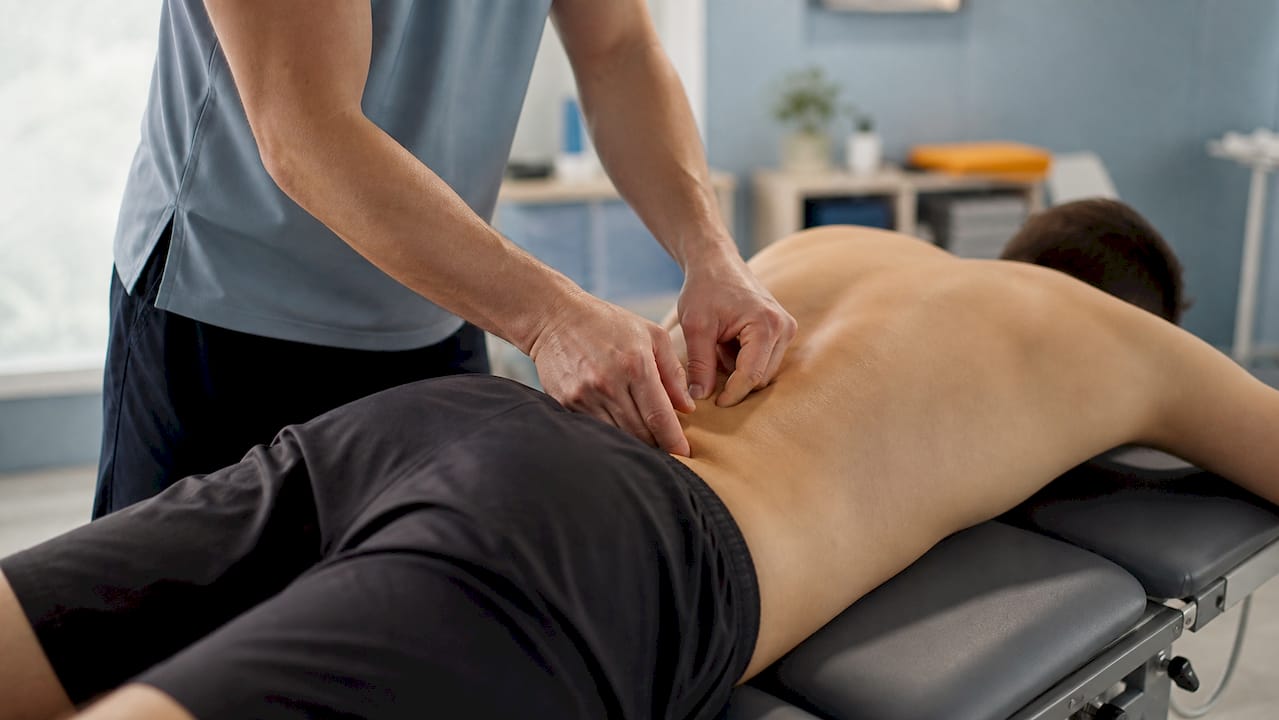
Manual therapy, including thrust and non-thrust joint mobilization, reduces pain and disability when mobility deficits are present. JOSPT reviews confirm it works best as part of a package with exercise, not as a standalone treatment.
Pain neuroscience education helps patients understand that pain does not always equal tissue damage, which reduces fear-avoidance behavior and improves exercise adherence.
Modalities such as heat, ultrasound, or electrical stimulation are used only as adjuncts to active treatment, never as the primary intervention.
A typical course of care starts with an initial 45–60 minute evaluation, followed by follow-up sessions every 1–2 weeks. Most patients with non-specific low back pain see measurable improvement in pain and function within 4–6 weeks of consistent participation. The multi-therapy department at GLOBALLMED Medical Center provides this full assessment and treatment pathway.
When to see a physiotherapist and when to go to the ER
Go to the emergency room immediately if you have any of the red flags listed in the opening section. These symptoms suggest serious pathology (cauda equina syndrome, fracture, infection, or malignancy) that requires urgent imaging and specialist review.
Book physiotherapy within the first 1–2 weeks for:
- Acute low back pain lasting more than a few days without improvement
- Pain that limits your ability to work, sleep, or perform daily tasks
- Recurring episodes (more than two in a year)
- Leg pain, tingling, or numbness without the red flags above
Yellow flags to discuss with your physiotherapist:
Yellow flags are psychosocial risk factors that predict delayed recovery and chronic pain. Your physiotherapist will screen for them because they change the treatment plan.
- Catastrophizing: believing the pain signals serious damage
- Fear-avoidance: avoiding movement because of pain fear
- Low mood or anxiety related to the pain
- High job dissatisfaction or workplace conflict
- Passive coping strategies (waiting for the pain to go away rather than staying active)
When yellow flags are present, combined physical and psychological approaches improve outcomes. Your physiotherapist may refer you to a psychologist or recommend a pain neuroscience education program alongside exercise.
On imaging: Routine X-rays or MRI scans are not recommended for non-specific low back pain. Imaging is reserved for cases with red flags, progressive neurologic deficits, or symptoms that fail to improve after 4–6 weeks of conservative care. Ordering imaging too early increases the likelihood of unnecessary procedures without improving outcomes.
How to progress your exercises safely and return to full activity
Safe progression follows one rule: change one variable at a time. Increase repetitions before adding load, and add load before increasing complexity.
- Week 1: Master form on all eight exercises at the prescribed reps. Pain during exercise should stay at or below 4/10 and settle within 30 minutes.
- Week 2: Add one set to the bridge, bird-dog, and dead-bug. Introduce 10–15 minutes of brisk walking daily.
- Week 3: Progress to single-leg bridge. Increase bird-dog hold to 5 seconds. Extend walking to 20–30 minutes.
- Week 4: Add a light resistance band to the bridge. Begin a graded return to any activity you have been avoiding (lifting, sport, prolonged sitting) using short, timed exposures.
Pain-monitoring rules for progression:
- Acceptable: mild muscle soreness 24–48 hours after exercise (delayed onset muscle soreness)
- Stop and consult: sharp, shooting, or worsening leg pain during or after exercise; pain above 5/10 that does not settle within 30 minutes; new neurologic symptoms
Ergonomic adjustments that reduce daily provocation:
- Sitting: lumbar support, hips at 90 degrees, screen at eye level; stand and move for 2–3 minutes every 30–45 minutes
- Lifting: hinge at the hips, keep the load close to your body, avoid twisting under load
- Sleeping: side-lying with a pillow between the knees reduces lumbar stress; avoid prolonged prone sleeping
Consistency in the home program determines long-term outcomes far more than the number of clinic visits. Clinic sessions are critical for technique correction and progression planning, but the daily home routine is what maintains spine strength and reduces recurrence. If progress plateaus after 6–8 weeks, re-consult your physiotherapist for reassessment and program adjustment. For guidance on chronic disease management and sustaining long-term recovery, structured outpatient follow-up provides the accountability most patients need.
What the major guidelines say about physiotherapy and exercise
The evidence base for exercise and physiotherapy in low back pain is among the strongest in musculoskeletal medicine.
Core guideline recommendations:
- WHO: Structured exercise programs and integrated biopsychosocial approaches are recommended for chronic primary low back pain. Structured education is part of every intervention class.
- NICE: Promotes activity, self-management, and group exercise programs. Manual therapy is recommended only as part of a package that includes exercise.
- JOSPT: Nonpharmacologic treatment, including professional physiotherapy and trunk strengthening programs, is first-line for chronic low back pain. Multimodal exercise approaches outperform single-modality programs.
- American Family Physician (AAFP): Recommends screening for yellow flags, integrating psychological strategies for persistent cases, and reserving imaging for red flags or failure of conservative care.
What the guidelines advise against:
- Routine imaging for non-specific low back pain
- Prolonged bed rest (counterproductive; graded activity is preferred)
- Traction as a standalone treatment
- Routine use of lumbar braces or TENS as primary interventions
| Guideline | Primary Recommendation | Notable Caution |
|---|---|---|
| WHO | Structured exercise + biopsychosocial approach | Avoid passive-only care |
| NICE | Group exercise + self-management; manual therapy with exercise | Manual therapy alone is insufficient |
| JOSPT | Multimodal exercise + professional PT as first-line | Single-modality programs are less effective |
| AAFP | Yellow flag screening + nonpharmacologic first-line | Reserve imaging for red flags or refractory cases |
A note on evidence certainty: most guideline recommendations for exercise are moderate-to-high certainty. Recommendations against routine imaging and bed rest are strong. Recommendations for specific manual therapy techniques or modalities are often conditional, meaning they apply when specific clinical findings are present.
Key takeaways for managing lower back pain with physiotherapy
Physiotherapy for lower back pain works best when exercise is started early, red flags are screened systematically, and the home routine is practiced daily.
- Start the 10–15 minute home routine immediately: cat–cow, knee-to-chest, bridge, bird-dog, dead-bug, hamstring stretch, piriformis stretch, and prone press-up.
- Use the 0–10 pain scale to monitor exercise: stay at or below 4/10 during activity, and stop if pain spikes above 5 or spreads further down the leg.
- Book a physiotherapy assessment within 1–2 weeks if pain limits daily function, if symptoms persist beyond a few days, or if yellow flags are present.
- Follow the four-week progression plan: increase one variable at a time, add walking, and use graded exposure to return to avoided activities.
- Seek emergency care immediately for red flags: bowel/bladder dysfunction, progressive leg weakness, saddle anesthesia, or severe unrelenting pain.
- GLOBALLMED Medical Center offers outpatient physiotherapy services with full clinical assessment, individualized exercise prescription, and manual therapy when indicated.
Authoritative resources and guideline references
The recommendations in this article draw from the following primary clinical sources. Each one covers a distinct aspect of lower back pain management.
| Source | What It Covers | Why It Matters |
|---|---|---|
| WHO Guideline for Non-Surgical Management of Chronic Primary Low Back Pain | Five intervention classes, structured exercise, biopsychosocial framework | Primary global standard for non-surgical LBP care |
| NICE — Low Back Pain and Sciatica | Assessment, self-management, group exercise, manual therapy as package | UK national standard; widely adopted internationally |
| JOSPT Review (Journal of Orthopaedic & Sports Physical Therapy) | First-line nonpharmacologic care, manual therapy indications, exercise dosage | Leading peer-reviewed PT clinical guidance |
| American Family Physician — Chronic Low Back Pain in Adults | Yellow flag screening, imaging guidance, psychological integration | Primary care–oriented clinical review |
| NLM/NCBI Clinical Overview — Low Back Pain and Sciatica | Acute timelines, referral triggers, conservative management thresholds | Clinically grounded overview of natural history and escalation |
These sources informed exercise selection, red-flag and yellow-flag screening criteria, imaging guidance, and the guideline summary table above.
GLOBALLMED Medical Center offers expert physiotherapy for lower back pain
If your lower back pain has persisted beyond a few days, limits your daily activity, or involves any of the yellow flags described above, a structured clinical assessment changes your outcome. Self-managed home exercise is the foundation, but technique errors, missed yellow flags, and poorly timed progressions are exactly what a physiotherapist corrects.

GLOBALLMED Medical Center provides outpatient physiotherapy and multi-therapy services with licensed clinicians who conduct full movement assessments, screen for red and yellow flags, and build individualized programs that go beyond a generic exercise sheet. The difference is a program calibrated to your specific movement deficits and pain behavior, adjusted at every session as you progress. Patients also benefit from the center’s integrated care model, with direct access to general practice, specialist referral, and wellness services under one roof. Book your physiotherapy assessment at GLOBALLMED Medical Center through the online appointment portal and start a program built around your clinical findings, not a template.