Getting a Hearing Test in Macau: What to Know Before You Book
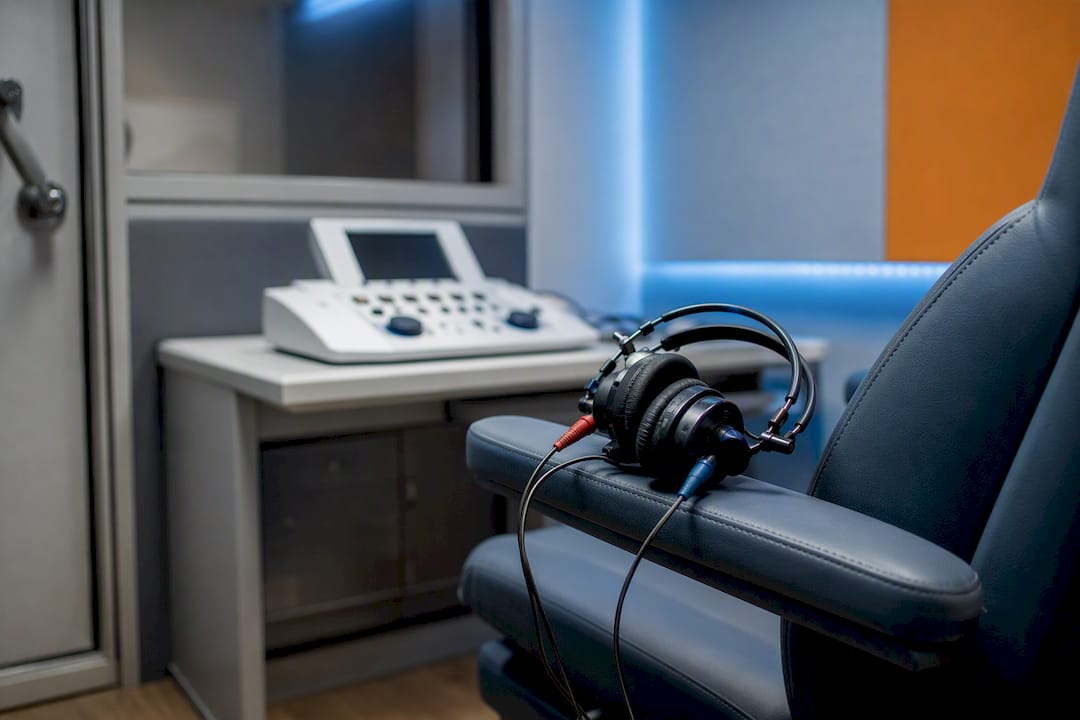
If you need a hearing test in Macau, you can get one done in person at a licensed outpatient facility, and the process usually takes under an hour. GLOBALLMED Medical Center offers audiology assessments with the equipment and clinical staff needed for accurate results, and you can book an appointment online or call ahead to confirm availability.
TL;DR:
- Private outpatient clinics like GLOBALLMED handle routine screenings with essential equipment, often offering same-week appointments for adults and children.
- Important testing components include pure-tone audiometry, tympanometry, otoacoustic emissions, and speech tests, each measuring different parts of hearing function.
- Pediatric screening follows the 1-3-6 principle, with tests like OAE and ABR, and early intervention is critical for speech and language development.
- Costs vary by test complexity, but clinics often provide direct billing with insurers; confirm coverage and potential follow-up fees beforehand.
- Preparing for the appointment involves avoiding loud noise and bringing relevant ID, insurance, medications, and prior hearing device info.
Table of Contents
- Where Can You Get a Hearing Test in Macau?
- What Do Pure-Tone, Tympanometry, OAE, and Speech Tests Actually Measure?
- When Should a Child Get a Hearing Screening?
- How Much Does a Hearing Test Cost, and Does Insurance Cover It?
- How Should You Prepare for a Hearing Test Appointment?
- Why Book Your Hearing Test at GLOBALLMED Medical Center?
- Ready to Schedule Your Hearing Test? Here’s How
Where Can You Get a Hearing Test in Macau?
Macau residents and visitors have a few real options for in-person hearing testing, and the right one depends on what you actually need diagnosed. Private outpatient clinics like GLOBALLMED Medical Center handle routine screenings, diagnostic audiometry, and referrals in one visit, often with same-week scheduling. Hospital audiology departments tend to serve more complex or referral-based cases, including occupational deafness assessments tied to workplace claims. Specialist hearing centers focus narrowly on hearing aid fitting and long-term device management.
For most adults noticing gradual hearing changes, or parents seeking a first-time pediatric check, a private outpatient clinic is the practical starting point. Complex cases, such as sudden hearing loss or suspected nerve damage, usually get routed to a hospital department with broader diagnostic imaging on-site.
Before booking anywhere, confirm these basics by phone or on the clinic’s services page:
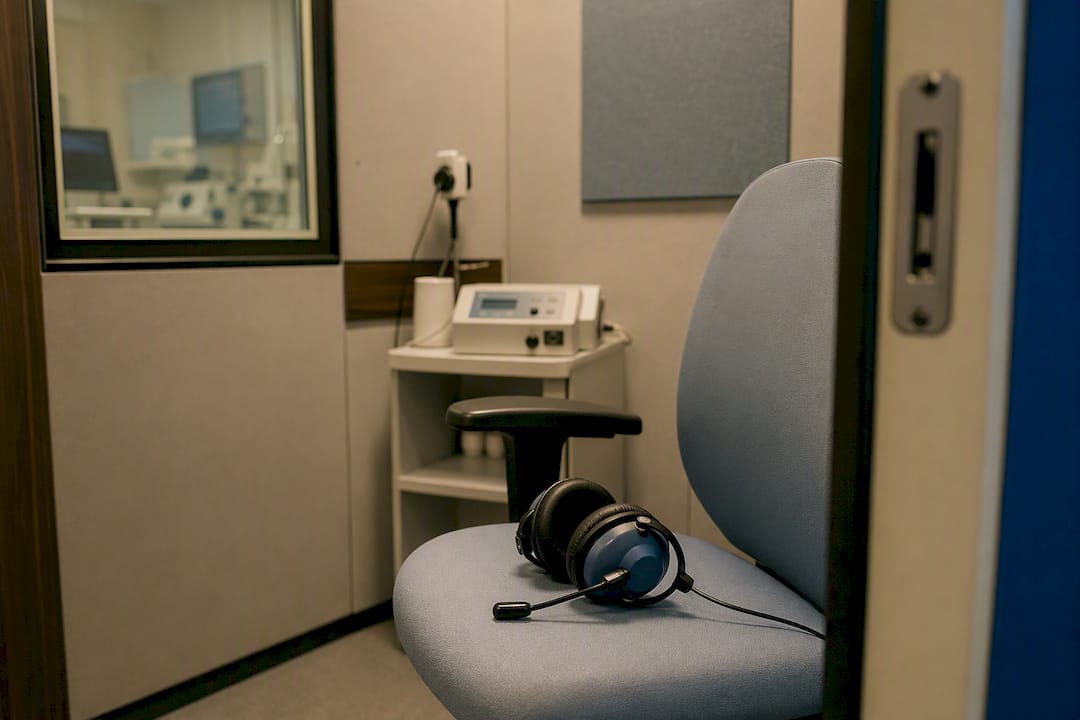
- A soundproof testing booth, not just a quiet office
- On-site tympanometer and OAE (otoacoustic emissions) equipment
- A licensed audiologist conducting or supervising the test
- Direct billing arrangements if you carry insurance
Skipping this check is how people end up with a screening that looks like a full diagnostic test on the invoice but isn’t one.
What Do Pure-Tone, Tympanometry, OAE, and Speech Tests Actually Measure?
Every hearing evaluation is really a stack of smaller tests, and each one checks a different part of your hearing system. Knowing what they measure makes the appointment far less confusing.
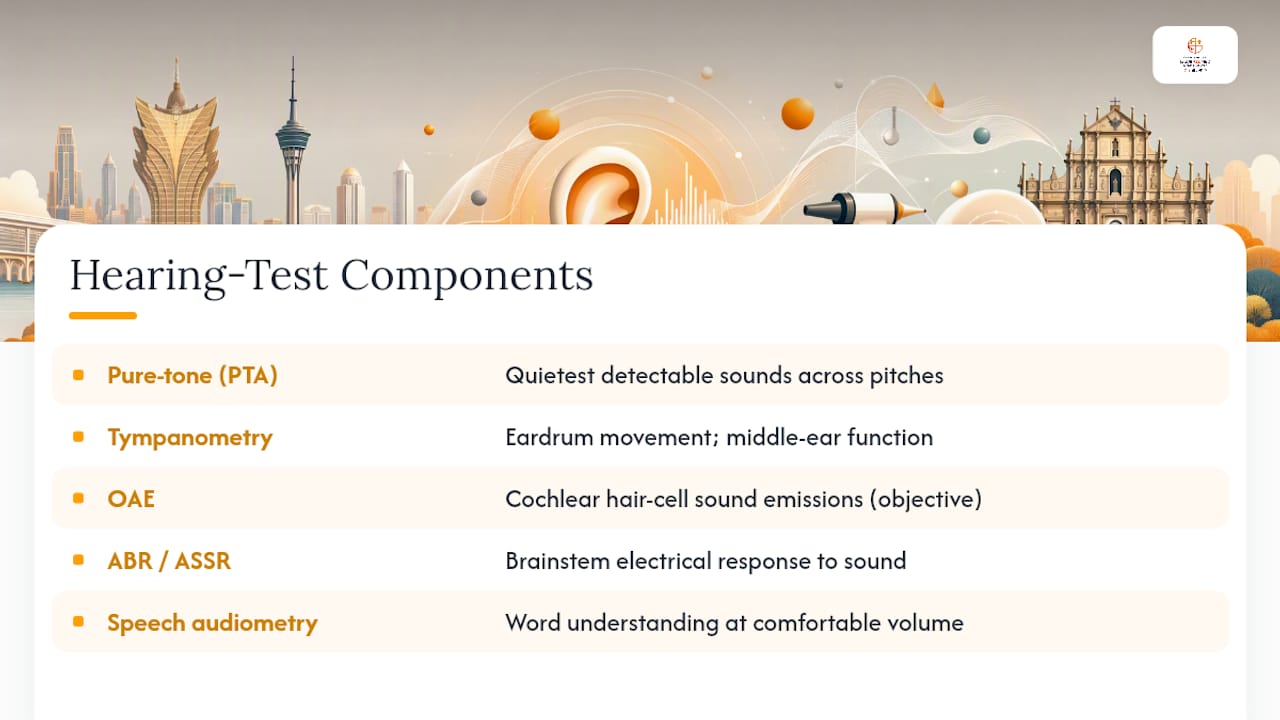
Pure-tone audiometry (PTA) is the test most people picture: you wear headphones in a sound booth and press a button or raise a hand when you hear a tone. It maps the quietest sound you can detect across different pitches and produces the audiogram your audiologist reads afterward.
Tympanometry checks how your eardrum moves in response to air pressure changes. It doesn’t test hearing directly. It flags middle ear problems like fluid buildup or a perforated eardrum, which is why it often runs before PTA.
OAE (otoacoustic emissions) measures tiny sound echoes produced by healthy cochlear hair cells. It’s the backbone of newborn screening because it requires no active response from the patient, just a quiet probe placed in the ear canal.
ABR and ASSR (auditory brainstem response and auditory steady-state response) are objective tests that track how the brainstem reacts to sound, useful for infants, sedated patients, or anyone who can’t reliably respond to a standard PTA.
Speech audiometry tests how well you understand words at comfortable volume, not just whether you detect a tone. It matters because some people detect sound fine but struggle to parse speech in noise, a pattern PTA alone misses.
Pro Tip: If you’ve used a phone-based hearing screening app like uHear before your visit, mention the results to your audiologist. It’s a reasonable first flag, but it doesn’t replace a booth-based diagnostic test, and the two shouldn’t be confused when you’re deciding whether to book a full assessment.
When Should a Child Get a Hearing Screening?
Pediatric hearing screening in Macau follows what audiologists call a widely recommended screening and intervention timeline called the ‘1-3-6 principle’, and the timing genuinely affects a child’s speech and language development.
- Newborns should receive early screening, typically with OAE testing which requires no behavioral response from the infant.
- Babies who do not pass the initial screening require comprehensive diagnostic assessments, often combining OAE with ABR.
- Confirmed hearing loss should be followed by prompt early intervention such as hearing aids, cochlear implant evaluation, or therapy.
Testing methods shift as children grow. Infants from six months to three years are usually assessed with Visual Reinforcement Audiometry (VRA), which rewards a head turn toward sound with a visual cue. Children between two and five move to Conditioned Play Audiometry (CPA), where the response gets built into a game. Parents shouldn’t wait for a formal screening date if they notice delayed speech, no startle response to loud noise, or a general gut feeling that something’s off. Ask for an earlier appointment instead.
How Much Does a Hearing Test Cost, and Does Insurance Cover It?
Costs vary depending on whether you need a basic screening or a full diagnostic workup, and clinics in Macau don’t all price these the same way. A simple screening audiogram costs less than a comprehensive session that adds tympanometry, OAE, and speech testing. Diagnostic packages that include ABR or ASSR run higher because of the equipment and time involved.
Many clinics, including GLOBALLMED Medical Center, offer direct billing with participating insurers, which means you may not need to pay upfront and file for reimbursement yourself. Bring your insurance card and any referral letter from a general practitioner if one was issued.
Before you confirm the appointment, ask reception these questions directly:
- What’s the estimated total if my insurer doesn’t fully cover the visit?
- Is a hearing aid trial or demo charged separately from the test itself?
- Are there follow-up fees if the audiologist recommends a second visit?
Some clinics structure hearing aid evaluation as two separate appointments, an initial assessment followed by a fitting session, and testing fees can apply differently depending on whether a device trial follows.
How Should You Prepare for a Hearing Test Appointment?
A little preparation keeps your results accurate and your visit short. Here’s the practical rundown:
- Before you leave home: Bring photo ID, your insurance card, a list of current medications, and details of any hearing device you already use.
- Avoid loud noise for 12 to 16 hours before testing. A loud concert or power tools the night before can temporarily raise your hearing threshold and skew results.
- At the clinic: Expect check-in, a brief case history discussion, then the sound booth tests. A standard adult evaluation runs 30 to 45 minutes; pediatric appointments can take longer since testing pauses for breaks.
- After testing: The audiologist reviews your audiogram with you the same day in most cases. Depending on results, you might get an ENT referral, a discussion about hearing aid options, or simply a recommendation to recheck in a year.
Pro Tip: If you’re bringing a child, schedule the appointment during their normal alert window, not nap time. A tired toddler makes VRA and CPA testing take twice as long.
Why Book Your Hearing Test at GLOBALLMED Medical Center?
GLOBALLMED Medical Center runs its audiology testing as part of a broader outpatient model, which means a hearing concern that turns out to be ENT-related, or tied to a developmental issue in a child, doesn’t require starting over at a different facility. The clinical team works alongside specialists across the medical clinic department, so referrals for ENT follow-up or pediatric evaluation happen inside the same medical center network.
For international patients and Macau residents alike, the practical advantages are straightforward: direct billing with participating insurers, multilingual staff for non-Cantonese and non-Portuguese speakers, and online booking that doesn’t require a phone call during business hours. That combination matters most for expatriates and medical tourists who need results fast and documentation they can actually use with an insurer back home.
Ready to Schedule Your Hearing Test? Here’s How
Traveling clinics and pop-up screening booths exist around Macau, but they typically offer basic screening only, without the diagnostic depth of tympanometry, OAE, and ABR under one roof. If you want a result you can actually act on, whether that’s a clean bill of hearing health or a referral pathway already built in, a full-service outpatient clinic is the more efficient route.

GLOBALLMED Medical Center handles the entire process through its services booking page, where you can select an audiology appointment without a phone call. Before your visit, gather your ID, insurance information, a current medication list, and any documentation from a previous hearing device fitting. If English, Portuguese, or Cantonese isn’t your first language, multilingual staff are available to assist international patients through the entire booking and consultation process, a detail that matters if you’re coordinating care from outside Macau. Book your appointment now and get a clear answer on where your hearing actually stands.
This article is general information, not a substitute for advice from a qualified doctor. Consult a qualified healthcare professional about your own circumstances before acting on anything here.