Why Workplace Health Checks in Macau Matter in 2026
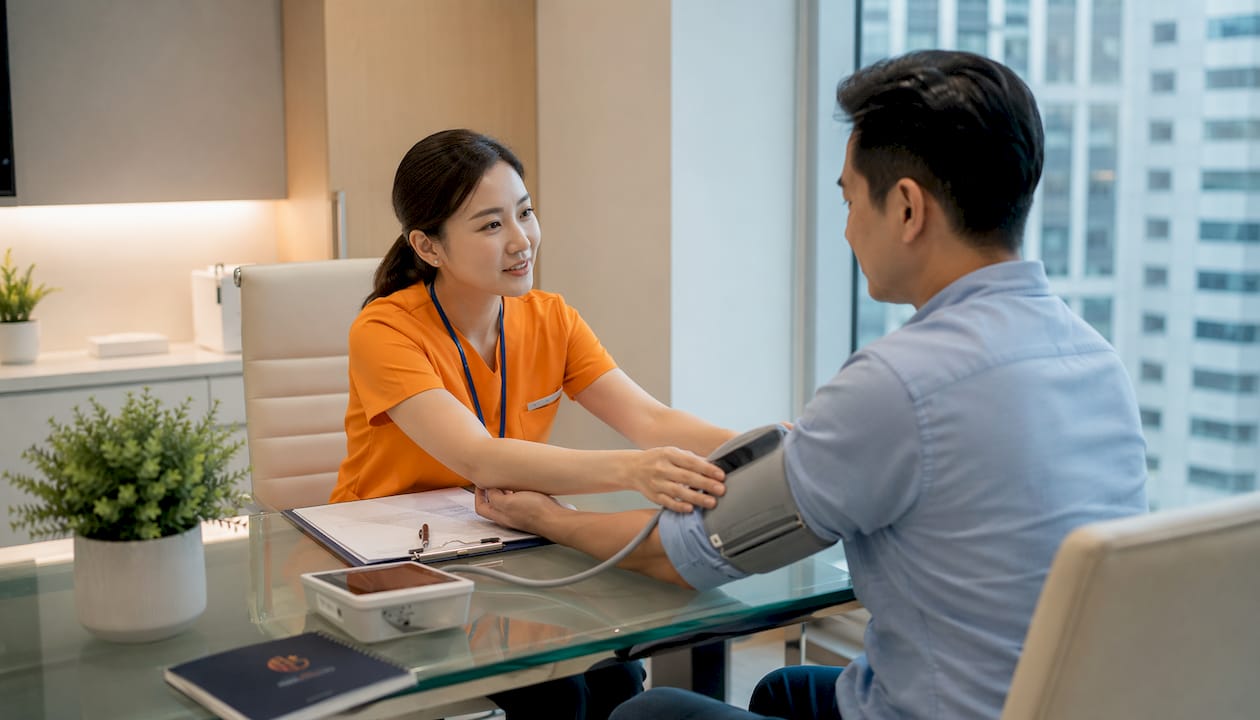
Workplace health checks in Macau are not optional extras. For employers operating under Macau SAR Government labor regulations, they represent a legal obligation, a risk management tool, and a direct investment in workforce productivity. The Labour Affairs Bureau (DSAL) oversees occupational health examinations and can organize physical checkups when employers suspect that workplace conditions are harming employee health or impairing function. Beyond compliance, regular health assessments catch early warning signs of chronic disease, reduce unplanned absences, and signal to employees that their well-being is taken seriously.
Here is why Macau employers and HR professionals prioritize these programs:
- Legal compliance: DSAL-mandated occupational health exams are tied to workplace hazard investigations under Macau SAR labor law.
- Early detection: Screenings identify cardiovascular, metabolic, and stress-related conditions before they escalate into long-term disability.
- Reduced absenteeism: Employees with managed health conditions miss fewer days and perform more consistently.
- Workforce retention: Proactive health programs improve morale and reduce turnover, particularly in high-demand sectors like hospitality and gaming.
- Cost control: Catching a condition early costs far less than managing a serious illness or replacing a skilled employee.
- Regulatory alignment: Checks aligned with international standards such as ISO 45001 position employers favorably during labor audits.
GLOBALLMED Medical Center supports Macau employers in building compliant, practical health check programs that meet both government requirements and the real health needs of their workforce.
What the legal framework requires from Macau employers
Macau’s occupational health regulations place clear responsibilities on employers, and the DSAL sits at the center of that framework. When an employer has reason to believe that workplace conditions are causing health problems or reducing employee function, they can formally request DSAL to organize and approve occupational health examinations. This is not a passive process. The bureau actively facilitates the investigation, coordinates with qualified medical institutions, and ensures that findings are documented appropriately.
Occupational health exams in Macau differ from general wellness screenings in a specific way: they are tied to workplace hazard investigations rather than routine preventive care. That distinction matters for HR teams designing their programs, because a general annual physical and a DSAL-coordinated occupational exam serve different legal and medical purposes.
Both civil servants and private sector employees are eligible for these examinations, though the pathways differ slightly. Civil servants access government-run health check centers, while private sector employers typically refer staff to accredited private medical providers. Relevant government entities involved include the DSAL, the Health Bureau (SSM), and the Macau SAR Government’s broader public health policy framework.
Key procedural steps under Macau labor law:
- Submit a formal request to DSAL when workplace hazards are identified or suspected.
- Document the specific hazard or health concern that triggers the examination request.
- Coordinate with an approved medical institution to conduct the physical examination.
- Maintain records of examination results in compliance with Macau data protection requirements.
- Follow up on findings with appropriate workplace modifications or employee referrals.
Pro Tip: Keep a written log of any employee health complaints linked to specific work tasks or environments. This documentation strengthens your case when requesting a DSAL-facilitated occupational health investigation and protects the company during any subsequent labor audit.
How workplace conditions in Macau affect employee health
Macau’s workforce operates in environments that carry specific health risks. Shift work in the gaming and hospitality sectors, prolonged sedentary office roles, and high-pressure customer-facing positions all correlate with elevated rates of cardiovascular strain, metabolic disruption, and psychological stress. Occupational health studies consistently link these conditions to increased risk of hypertension, type 2 diabetes, and burnout, particularly among workers who rotate between day and night shifts.
The connection between workplace environment and chronic disease is not theoretical in Macau’s context. Employers in the gaming sector have already begun integrating advanced diagnostics into their annual health programs, including AI-assisted retinal scanning that can identify systemic risk indicators well before symptoms appear. This approach goes beyond the standard blood panel and reflects a shift in how leading Macau employers think about occupational health: less as a compliance checkbox, more as a genuine early warning system.
Regular occupational health monitoring in Macau’s high-intensity work environments gives employers the data to act before a manageable condition becomes a costly long-term absence. Early detection of cardiovascular and metabolic risk factors through structured workplace screenings is one of the most direct interventions available to HR teams.
Mental well-being is increasingly part of this picture. Macau workplace wellness programs in 2026 incorporate “Inner Wellness” themes alongside physical screenings, recognizing that psychological health directly affects attendance, decision-making, and team cohesion. A workforce under chronic stress produces measurably different outcomes than one with access to mental health support, and occupational health checks are the entry point for identifying who needs that support.
The business case for regular employee health monitoring
The operational benefits of workplace health checks extend well beyond avoiding regulatory penalties. Employers who run structured health programs typically see lower rates of both absenteeism and presenteeism. Presenteeism, where employees show up but perform below capacity due to unmanaged health conditions, often costs more than outright absence because it is harder to measure and easier to ignore.

Early disease detection directly reduces long-term healthcare costs. An employee identified with pre-diabetic markers during a routine screen can be referred for dietary counseling and monitoring. Left undetected, the same condition may progress to full type 2 diabetes, requiring ongoing medication, specialist visits, and potentially extended sick leave. The financial difference between those two outcomes is significant for any employer carrying health-related costs.
Alignment with ISO 45001, the international standard for occupational health and safety management, gives Macau employers a structured framework for integrating health checks into broader risk management. Leading employers in Macau already incorporate this standard into their workplace health programs, which positions them favorably with international business partners and during regulatory reviews.
Key operational and business advantages of structured health check programs:
- Lower absenteeism rates through early identification and management of chronic conditions.
- Improved employee engagement when staff see that the organization invests in their health.
- Reduced turnover in competitive labor markets like Macau’s gaming and hospitality sectors.
- Better risk management through documented health data that informs workplace safety decisions.
- ISO 45001 alignment for employers seeking international certification or audit readiness.
- Cost efficiency through government medical vouchers that subsidize employee participation in chronic disease screenings.
Macau’s government-issued medical vouchers, available to permanent residents aged 18 and older since August 2025, allow employees to use subsidized screenings at private clinics without direct cost to the employer. With 79 participating practitioners in the network, this scheme gives HR teams a practical way to expand health check coverage without increasing the corporate health budget.
How to build an effective workplace health check program in Macau
A well-designed program starts with clarity about what you are trying to achieve. Compliance-driven checks and proactive wellness screenings serve different goals, and the best programs address both. Here is how to structure one that works in Macau’s regulatory and healthcare environment.
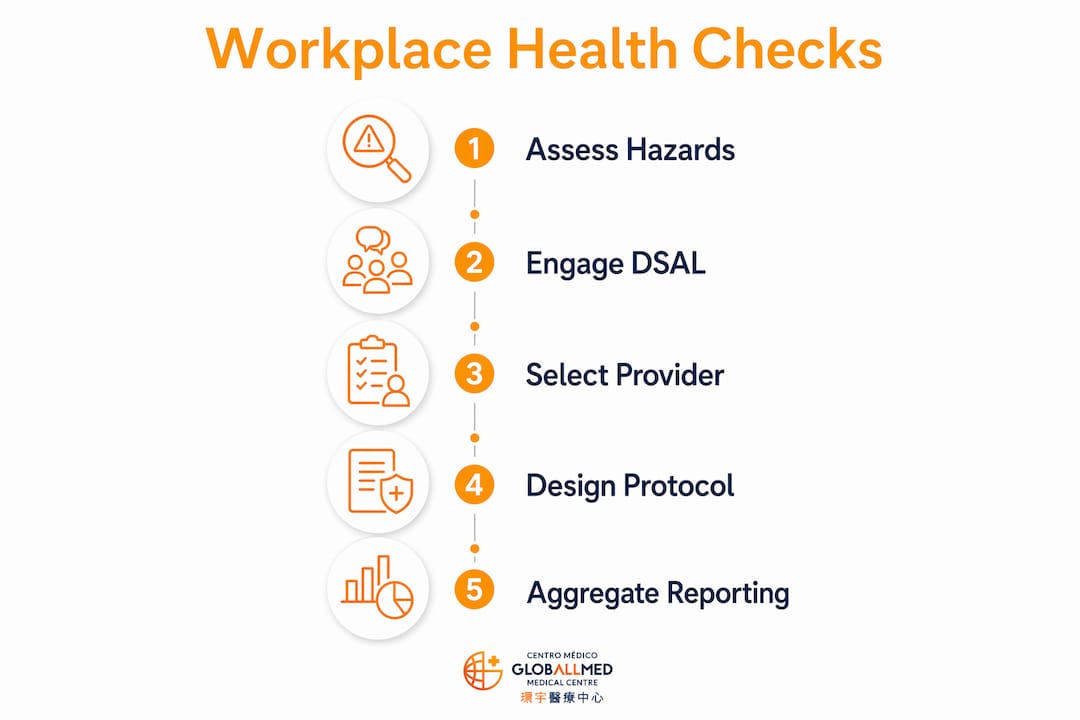
Step 1: Assess your workplace hazards. Before requesting any examination, document the specific conditions in your workplace that may affect employee health. This includes physical hazards like noise or chemical exposure, ergonomic risks from repetitive tasks, and psychosocial stressors from shift patterns or workload.
Step 2: Engage DSAL for occupational health investigations. When documented hazards exist, submit a formal request to the Labour Affairs Bureau. DSAL will coordinate the examination process and connect you with approved medical institutions. This step is legally required when workplace conditions are suspected of causing health impairment.
Step 3: Select an accredited medical provider. For private sector employees, partnering with an accredited outpatient center like GLOBALLMED Medical Center gives you access to a full range of diagnostic services, flexible scheduling, and staff experienced in occupational health assessments. Private providers also avoid the long wait times that affect government-run civil servant health centers.
Step 4: Design a screening protocol that covers the right conditions. A strong program goes beyond basic blood work. Include chronic disease risk assessments (cardiovascular, metabolic, and respiratory), mental wellness evaluations, ergonomic assessments for desk-based roles, and vision and hearing checks for relevant job categories.
Step 5: Schedule checks to minimize operational disruption. Stagger appointments across departments rather than pulling entire teams at once. Early morning or late afternoon slots work well for shift-based workforces. Coordinate with your medical provider to set up on-site or near-site screening days when volume justifies it.
Best practices for implementation:
- Use government medical vouchers to offset employee screening costs where eligible.
- Communicate clearly to employees that health data is confidential and will not affect employment decisions.
- Establish a follow-up protocol so employees with flagged results receive timely referrals.
- Review program outcomes annually and adjust the screening panel based on emerging health trends in your workforce.
- Integrate mental wellness assessments alongside physical screenings to capture the full health picture.
Pro Tip: Ask your medical provider to deliver a de-identified aggregate health report for your workforce after each screening cycle. This data helps you identify patterns, such as elevated blood pressure rates in a specific department, and adjust workplace conditions or wellness initiatives accordingly, without compromising individual privacy.
Why GLOBALLMED Medical Center is a trusted partner for workplace health checks
Private accredited medical centers play a specific and growing role in Macau’s occupational health ecosystem. Government-run health check centers for civil servants face well-documented scheduling challenges, including long wait times and limited appointment flexibility. Private providers fill that gap with standardized, timely medical exams that fit employer scheduling needs without sacrificing clinical quality.
GLOBALLMED Medical Center operates as Macau’s largest private outpatient clinic, offering a full spectrum of medical services suited to workplace health programs. The center’s clinical team includes specialists across multiple disciplines, enabling employers to arrange comprehensive screenings that go beyond what a single-specialty provider can offer. Diagnostic imaging, chronic disease risk assessments, specialty consultations, and wellness evaluations are all available under one roof.
Macau’s integrated healthcare system supports public-private cooperation, and GLOBALLMED Medical Center operates within that framework. Employers who refer staff to the center can be confident that examinations meet Macau SAR regulatory standards and align with the documentation requirements that DSAL and other government bodies expect. The center also adheres to data protection standards, which matters when handling sensitive employee health information.
Key services and credentials relevant to workplace health programs:
- Chronic disease risk assessments covering cardiovascular, metabolic, and respiratory health.
- Diagnostic imaging for comprehensive physical evaluations.
- Specialty consultations across internal medicine, occupational health, and allied health disciplines.
- Wellness and wellbeing services that support mental health and preventive care goals.
- Flexible appointment scheduling designed to accommodate employer-organized group screenings.
- Regulatory compliance with Macau SAR health standards and data protection requirements.
Macau’s public-private healthcare cooperation model means employers are not choosing between quality and compliance when they work with accredited private centers. They are accessing a system designed to support both. For HR teams looking to build or upgrade their workplace wellness programs, private outpatient care through a center like GLOBALLMED Medical Center offers the flexibility and clinical depth that government facilities alone cannot always provide.
Employee privacy and data protection during health checks
Handling health data requires the same rigor as any other sensitive personal information, and Macau’s legal framework reflects that. Employees have the right to know what data is being collected, how it will be used, and who will have access to it. HR teams must establish clear policies before any screening program begins.
Health check results belong to the individual employee. Employers can receive aggregate, de-identified reports for workforce planning purposes, but individual results should flow directly to the employee and their treating physician. Any deviation from this principle creates legal exposure and, more practically, erodes the trust that makes employees willing to participate honestly in future screenings.
Consent must be documented before examinations begin. Employees should sign a clear consent form that explains the scope of the screening, the data storage arrangements, and their right to access their own results. Medical providers like GLOBALLMED Medical Center maintain privacy policies aligned with Macau’s data protection standards, which simplifies this process for employers who partner with them rather than managing data handling independently.
Common challenges and how Macau employers solve them
Scheduling is the most common friction point. Pulling employees away from operational roles for health checks creates short-term disruption, particularly in 24-hour industries like gaming and hospitality. The solution is staggered scheduling coordinated well in advance, with department heads involved in the planning process so coverage gaps are managed proactively.
Employee reluctance is the second challenge. Some employees avoid health checks because they fear that results will affect their employment status. Clear, written communication from HR leadership, confirming that participation is voluntary for non-hazard-related checks and that individual results are confidential, addresses most of this concern. When employees trust the process, participation rates rise.
Cost is a real consideration for smaller employers. Government medical vouchers available to Macau permanent residents since August 2025 reduce the direct cost burden for eligible employees. For employers covering costs directly, partnering with a private center that offers group screening packages provides better value than individual appointments.
Key Takeaways
Workplace health checks in Macau serve legal, medical, and operational purposes simultaneously, and employers who treat them as a genuine program rather than a compliance task see measurably better workforce outcomes.
| Point | Details |
|---|---|
| DSAL oversees occupational health exams | Employers must formally request DSAL involvement when workplace hazards are suspected of causing health impairment. |
| Government vouchers reduce screening costs | Since august 2025, Macau residents 18 and older can use government-issued medical vouchers at a number of participating private clinics for chronic disease screenings. |
| ISO 45001 alignment strengthens risk management | Leading Macau employers integrate this international standard into health check programs for audit readiness and workforce resilience. |
| Private providers solve scheduling bottlenecks | Accredited centers like GLOBALLMED Medical Center offer flexible group scheduling that government-run facilities often cannot match. |
| Data protection is a legal and trust requirement | Individual health results must remain confidential; employers should receive only de-identified aggregate reports for workforce planning. |